RTLS Solutions for Healthcare-Associated Infections Prevention
Healthcare facilities constantly strive to enhance patient safety and minimize the risk of healthcare-associated infections (HAIs). Moreover, Real-Time Location Systems (RTLS) have emerged as a valuable technology in this quest. Specifically, they offer innovative solutions to monitor and manage various aspects of hospital operations.
The Burden of Healthcare-Associated Infections
HAIs pose a serious threat to patient well-being. Furthermore, they add to the complexity and cost of healthcare delivery. According to the Centers for Disease Control and Prevention (CDC), approximately one in 31 hospitalized patients in the United States acquires at least one HAI [1]. Additionally, these infections not only compromise patient recovery but also strain healthcare resources.
How do RTLS Solutions Operate? And which technology is the most suitable?
Real-Time Location Systems (RTLS) employ various technologies to implement location-based solutions. Notably, each technology has its merits and drawbacks. Specifically, these primarily stem from the accuracy at cost tradeoff, including both initial investment and operational costs. For example, RTLS technologies include Ultra-wideband (UWB), Ultra-sonic, Infra-Red and RFID.
In our pursuit of an optimal solution, Penguin developed its own RTLS solution using Bluetooth Low Energy 5.1 (BLE 5.1) with healthcare in mind. Today, Penguin’s sub-meter positioning accuracy serves as the underlying enabler for the HAI prevention solution that Penguin offers.
RTLS Applications for Minimizing the Risk of Healthcare-Associated Infections (HAIs)
Asset Tracking
First and foremost, RTLS systems assist in monitoring the movement and usage of medical equipment. Consequently, this ensures that healthcare facilities properly clean and disinfect devices between uses. Moreover, by maintaining a digital record of equipment locations and usage, healthcare facilities can implement strict protocols for equipment hygiene. As a result, this reduces the risk of cross-contamination.
People Tracking
Second, real-time location tracking of patients allows healthcare providers to monitor their movements throughout the facility. This proves particularly crucial in quarantine scenarios. Specifically, in these cases, healthcare providers must isolate patients with contagious diseases. Furthermore, RTLS systems enhance the ability to implement effective isolation measures. Therefore, this limits the spread of infections within the hospital environment.
Staff Monitoring
Third, healthcare professionals play a pivotal role in preventing the transmission of infections. Moreover, RTLS systems enable the tracking of staff movements. Consequently, this ensures that staff adhere to hygiene protocols consistently. Additionally, this includes monitoring hand hygiene compliance and optimizing workflows. Therefore, this minimizes unnecessary exposure to infectious agents.
Workflow Optimization
Finally, RTLS technology helps streamline hospital workflows. Specifically, it provides real-time insights into the movement of patients, staff, and equipment. Furthermore, by optimizing the flow of people and resources, healthcare facilities can reduce congestion. Additionally, they can improve response times. Ultimately, this enhances infection control measures.
Penguin Location service: Your Partner in HAI Prevention
By leveraging the capabilities of real-time location tracking, hospitals can implement proactive measures. Specifically, these measures reduce the risk of infections, improve patient safety, and enhance overall operational efficiency. This is where Penguin comes in.
Moreover, our adopted technology (PenTrack) receives expert design to ensure swift and affordable solutions. Furthermore, we provide the hardware and grant access to our state-of-the-art algorithms. Consequently, these ensure efficient and accurate results. Additionally, our solutions integrate seamlessly into physical and software environments. Therefore, we accommodate our solutions with near zero-overhead.
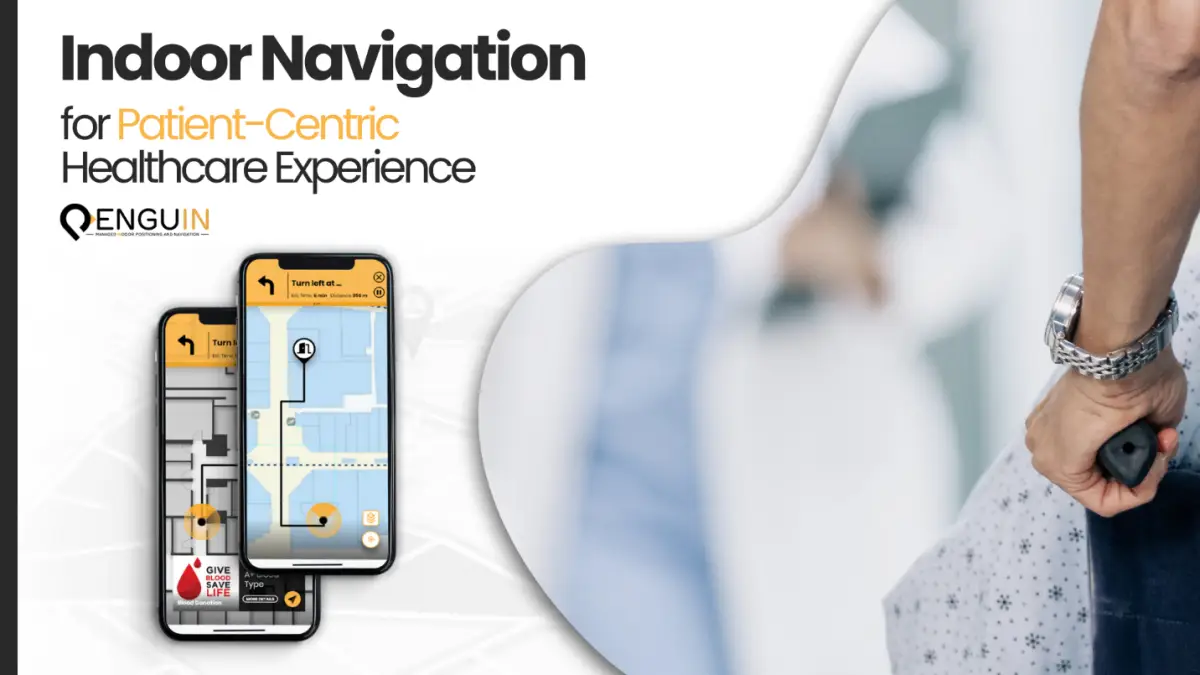
In the pursuit of putting patients at the center of the healthcare experience, hospitals face the challenge of guiding individuals through large, complex facilities with multiple floors and sections. Even experienced healthcare workers sometimes encounter difficulties navigating hospital campuses. But patients, especially first-time visitors, often struggle the most.
Historically, hospitals relied on signage and front-desk guidance. While useful, these approaches had limitations and didn’t consistently provide reliable indoor navigation solutions.
Today, healthcare facilities are shifting toward smarter indoor navigation systems that leverage location data, Bluetooth-enabled applications, and intuitive indoor wayfinding technology to support patients, visitors, and staff alike.
Use Cases for Indoor wayfinding in Healthcare
Modern indoor navigation technology in hospitals offers a variety of benefits:
Accessibility:Indoor navigation provides mobility-friendly routes and live updates.
Location-Based Messaging: Hospitals can deliver context-driven alerts and reminders.
EHR Integration: Linking navigation solutions with patient records enhances the digital healthcare experience.
Emergency Response: In Code Blue scenarios, navigation technology integrated with RTLS helps staff respond faster.
Benefits and Outcomes
Short-Term
Quicker patient flow, reduced wait times.
Lower stress for patients unfamiliar with the facility.
More efficient staff operations.
Long-Term
Improved patient loyalty.
Stronger hospital reputation with modern wayfinding solutions.
Streamlined operations, improved HCAHPS scores, and compliance.
Impact on Patients & Staff
Indoor navigation systems do more than guide, they reduce anxiety and improve transparency for patients. For staff, these solutions ease the onboarding process, improve satisfaction, and allow more focus on direct care rather than giving directions.
ROI of Indoor Navigation Systems
Hospitals adopting indoor navigation solutions see clear returns:
Cost Savings: Lower reliance on physical signage and maps.
Staff Efficiency: Automation reduces time spent guiding patients.
Revenue Growth: A better patient experience leads to loyalty and referrals.
Why BLE-Based Indoor Navigation Systems ?
Penguin Location Services delivers advanced indoor navigation technology powered by BLE (Bluetooth Low Energy). Key advantages include:
Scalability: Expandable networks for growing facilities.
Mobile Integration: Seamless use with hospital apps.
Get in Touch
Penguin Location Services specializes in indoor wayfinding systems and hospital wayfinding solutions. Our PenNav Indoor Wayfinding Solution integrates smoothly with hospital applications and IT infrastructure.
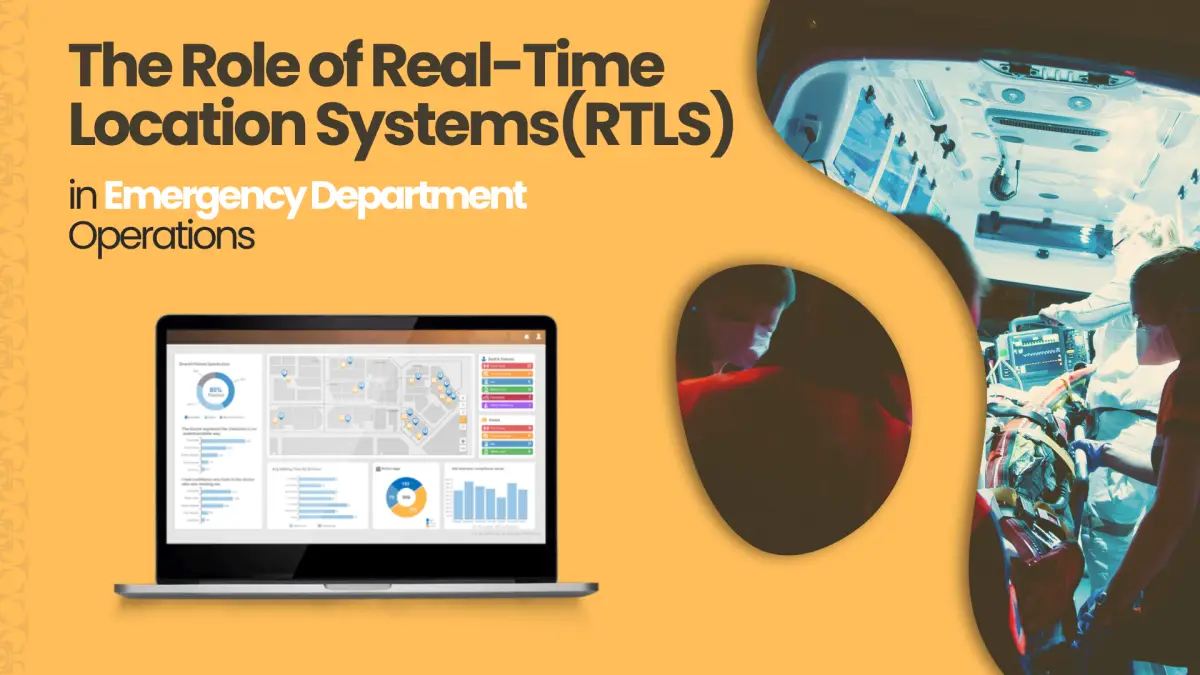
How RTLS Indoor Technology Solves ED Wait-Time Challenges
Efficiently managing emergency department (ED) wait-time is a critical global healthcare challenge. Statistics reveal the severity of this issue clearly.
In the US, approximately 78.3% of all patients receive timely care. However, only 66.9% of those needing immediate attention within one hour are seen by a physician within the recommended timeframe. This occurs in the median ED across the country.
Furthermore, the situation becomes more concerning when examining triage targets. Only 30.5% of EDs consistently meet these targets for over 90% of their patients. Moreover, a mere 13.8% achieve this benchmark for patients triaged for a one-hour window. [1]
These delays have profound consequences. They affect patient outcomes negatively. Additionally, they damage hospital reputation significantly. They also threaten financial viability substantially.
However, Penguin offers an innovative solution to these challenges. Our indoor RTLS (Real-Time Location System), PenTrack, transforms ED operations completely.
How RTLS Indoor Technology Transforms ED Operations
RTLS Indoor technology delivers multiple operational improvements simultaneously. This real-time indoor positioning system provides complete visibility across the emergency department. Specifically, it optimizes resource allocation effectively. Moreover, it streamlines patient pathways comprehensively. Furthermore, it improves operational efficiency across all departments.
As a result, this enhances ED management significantly. It helps hospitals not only meet triage targets but exceed them. Additionally, it boosts their bottom line substantially.
9 Ways RTLS Indoor Solutions Resolve ED Problems
Here’s what indoor RTLS solutions offer hospitals while enhancing patient experience:
1. Enhanced Patient Flow: Optimizing Processes
RTLS Indoor offers precise patient tracking within the ED continuously. This indoor positioning technology minimizes bottlenecks effectively. Consequently, it reduces wait times significantly. Therefore, it streamlines patient flow throughout the department.
Real-time visibility enables staff to identify delays instantly. They can then address issues proactively.
2. Reduced Patient Length of Stay: Faster Care Delivery
Through streamlined processes and timely care coordination, RTLS Indoor contributes to shorter patient LOS. This enables quicker bed turnover rates. As a result, it increases ED capacity substantially.
Faster patient movement means more patients receive care promptly. This improves overall department efficiency.
3. Resource Allocation: Efficient Utilization
Real-time indoor positioning provides comprehensive visibility into critical resources. Specifically, it tracks staff locations continuously throughout the facility. Additionally, it monitors equipment availability instantly. Furthermore, it follows patient movements precisely across all ED zones.
This ensures efficient allocation of resources across the department. It prevents overstaffing in some areas. Moreover, it optimizes resource usage throughout the facility.
4. Improved Patient Satisfaction: Elevating the Experience
Enhanced ED efficiency, facilitated by RTLS Indoor technology, fosters patient satisfaction significantly. When patients receive timely care through optimized indoor positioning, they feel valued. Consequently, this fosters trust and loyalty among patients.
Satisfied patients are more likely to recommend the hospital. They also provide positive reviews consistently.
Accurate tracking of patient movements is essential for proper billing. RTLS Indoor monitors treatments comprehensively throughout the patient journey. Therefore, it ensures precise billing without errors.
This reduces the risk of revenue loss substantially. It also eliminates billing disputes effectively.
Indoor RTLS generates valuable data continuously for detailed analysis. This allows hospitals to make informed decisions confidently. Moreover, they can optimize processes based on real evidence from indoor positioning insights.
Consequently, this improves patient care quality consistently. It also enhances operational efficiency measurably.
Effective patient flow management with indoor RTLS reduces the need for diversions. This is especially important during peak times. Therefore, it ensures continuous ED operation without interruptions.
Continuous operation means consistent revenue generation. It also maintains the hospital’s reputation in the community.
8. Improved Compliance and Documentation: Meeting Standards
RTLS Indoor enhances compliance with regulatory requirements automatically. Additionally, it improves documentation standards significantly. This reduces the risk of penalties substantially.
Moreover, it prevents revenue loss due to non-compliance issues. It also streamlines audit processes effectively.
RTLS Indoor facilitates improved coordination with EMS providers substantially. This leads to faster patient transfers between facilities. Additionally, it enables better communication among all parties.
Ultimately, this optimizes ED resource utilization comprehensively. It also improves patient outcomes measurably.
The Value of RTLS Indoor in Healthcare
In the healthcare domain, RTLS Indoor stands as a valuable tool for modern hospitals. It streamlines ED operations comprehensively through real-time indoor positioning. Moreover, it improves patient care quality significantly.
While the benefits are evident across multiple metrics, successful implementation requires careful planning. Additionally, it needs tailored monitoring strategies. These must align with each hospital’s unique needs specifically. They should also match organizational objectives precisely.
Transform Your Emergency Department Today
Ready to revolutionize your ED operations with indoor positioning technology? Penguin’s PenTrack indoor RTLS solution delivers measurable results. Reduce wait times, improve patient satisfaction, and boost your bottom line through advanced real-time location tracking.
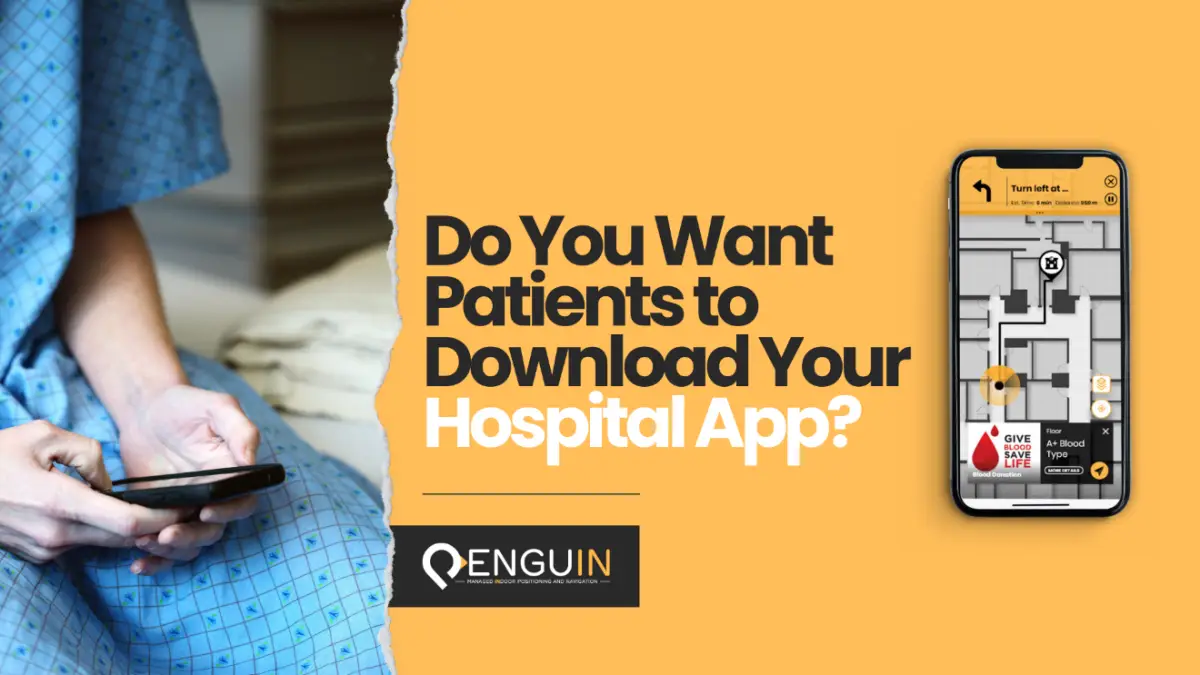
Hospital Mobile Apps: Boosting Adoption and Enhancing Patient Outdoor – Indoor Navigation Experience
Healthcare institutions are increasingly leveraging technology to enhance patient experiences and streamline services. One powerful tool is the hospital mobile app, two-thirds of the largest U.S. hospitals already offer one [Accenture, 2016].
These apps benefit both patients and staff. But building a successful app is only the beginning. To maximize value, adoption must be prioritized. This article explores strategies to drive uptake and highlights how Penguin Location Services integrates AI in location services, UWB positioning systems, and modern wayfinding technology to elevate patient care.
Building the Hospital Mobile App: What to Keep in Mind
1. Understanding User Needs
Patient experience should come first. Apps must simplify health management, appointment booking, and access to data. At the same time, healthcare staff should benefit from tools that reduce workload and streamline daily tasks.
2. User-Centric Design
Apps need a simple, intuitive interface that works for diverse patient demographics. A well-designed hospital tracking app encourages adoption and ongoing use.
3. Privacy and Security
Patient trust depends on strict data protection. Strong cloud services and centralized security measures are essential to safeguard sensitive medical information.
Value-Added Features that Drive Adoption
Patient-Centric Records: Access to medical history, test results, and reminders.
Appointment Management: Real-time scheduling, rescheduling, and cancellations reduce no-shows.
Telemedicine: Virtual visits and consultations empower patients and expand access to care.
Outdoor – Indoor Navigation: Integrated wayfinding technology ensures patients can move seamlessly from parking lots to hospital entrances and directly to their appointments, reducing anxiety and saving time.
UWB Positioning Systems: Ultra-wideband precision enables real-time tracking of staff, patients, and assets, ensuring efficiency and safety during critical scenarios like Code Blue emergencies.
These features transform apps into more than digital tools, they become patient engagement platforms powered by AI in location services.
Strategies to Market Your Hospital App
To ensure adoption, hospitals must actively promote their apps. Some proven strategies include:
Feature Branding: Spotlight individual features like Outdoor – Indoor Navigation to highlight unique value.
Wi-Fi Landing Pages: Encourage downloads when patients connect to hospital Wi-Fi.
QR Codes: Simple, instant access to the app store.
User Reviews: Build trust by showcasing positive experiences.
Staff Advocacy: Train nurses, physicians, and assistants to recommend the app to patients.
Print Promotion: Flyers, posters, and cards placed in waiting areas drive awareness.
Penguin Location Services supports hospitals not only with wayfinding technology but also with adoption strategies that increase downloads and ensure lasting engagement.
Partnering with Penguin Location Services
At Penguin Location Services, we specialize in AI in location services, UWB positioning systems, and advanced wayfinding technology that enhance hospital apps. From Outdoor – Indoor Navigation to RTLS-enabled staff tracking, our solutions empower healthcare institutions to deliver better patient experiences and more efficient workflows.
Every year, North American hospitals spend millions of dollars on medical equipment they already own but cannot find. IV pumps sit idle in unused rooms while clinical staff search corridors. Wheelchairs accumulate in discharge areas while patients wait. Infusion pumps get hoarded on high-demand units while other floors run short and submit emergency purchase requests.
The financial and operational cost of this invisible problem is significant, and almost entirely preventable.
This guide explains what RTLS healthcare asset tracking actually delivers in practice, what the ROI data shows from real hospital deployments, and what hospital administrators and clinical engineers need to evaluate when choosing a system.
The Asset Visibility Problem in Healthcare
The core challenge in hospital asset management is not equipment shortage, it is equipment invisibility. Most acute care hospitals own more medical equipment than their patient census requires. The problem is that a significant portion of that inventory is effectively inaccessible at any given time because nobody knows where it is.
Research from North American hospital deployments consistently documents the same pattern. IV pump utilization rates in facilities without tracking average 30 to 35 percent, meaning two-thirds of owned pumps are sitting idle somewhere in the building, unavailable to clinical staff who need them. Equipment loss and theft add to the problem, but studies show the majority of “lost” assets are simply located in unexpected places: storage rooms that are rarely checked, discharged patient rooms that have not been cleared, or units that have accumulated more than their fair share through informal hoarding.
The Real Cost of Poor Visibility
The financial consequences of poor asset visibility compound across multiple budget lines. Clinical staff spend 20 to 45 minutes per shift searching for missing equipment, time that cannot be recovered or billed. Procurement departments order equipment to replace items that are already on-site but unfindable. Rental companies receive regular calls for temporary equipment that covers shortages caused by poor distribution rather than genuine inventory gaps. Biomedical engineering teams defer preventive maintenance on devices they cannot locate, creating compliance gaps and increasing failure rates.
A study tracking 3,459 infusion pumps across a 1,154-bed hospital found that RTLS achieved 93 percent fleet coverage, near-complete visibility into pump location and movement patterns across the entire facility. The operational changes enabled by that visibility generated documented financial returns across every one of the cost categories above.
The most expensive equipment problem in most hospitals is not theft or damage. It is invisibility. A hospital that cannot see its inventory operates as if it owns far less than it does, and purchases, rents, and staffs accordingly.
Core RTLS Asset Tracking Use Cases in Hospitals
Hospital asset tracking with RTLS delivers value across several distinct operational domains. Understanding which use cases apply to your facility helps build a realistic business case and prioritize implementation.
Equipment Location and Retrieval
The most immediate operational benefit is real-time location visibility. Clinical staff search for the nearest available IV pump, wheelchair, or monitoring device through a dashboard or mobile interface and see its exact room-level location in seconds. What previously took 20 to 30 minutes of corridor searching takes under 60 seconds. Across a full nursing workforce in a 400-bed hospital, this recovery of clinical time is one of the most measurable benefits of any operational technology deployment.
Fleet Management and PAR-Level Monitoring
PAR-level management uses location data to monitor equipment distribution across units in real time. When a unit’s equipment count drops below its defined minimum level, the system generates an automatic alert to logistics staff. Redistribution happens proactively, before a clinical team is scrambling during a patient emergency. Units that are over their PAR level get flagged for redistribution, preventing hoarding before it develops into a site-wide shortage. This is the shift from reactive to proactive asset management that delivers the largest long-term operational improvement.
Preventive Maintenance and Biomedical Engineering
Biomedical engineering teams can locate any device due for inspection or calibration in seconds rather than spending time searching the facility. Usage-based maintenance triggers replace calendar-based scheduling, devices that are heavily used get serviced more frequently, while lightly used devices are not pulled unnecessarily. When a manufacturer issues a recall or safety notice, the RTLS locates every affected device instantly rather than triggering a facility-wide physical search that takes days.
Decontamination Workflow Automation
When location data is combined with decontamination zone detection, cleaning workflows become automated. The system records when a device enters and exits the decontamination area, assigning a digital clean status that staff can verify instantly. Devices that re-enter patient areas without a recorded decontamination event trigger an automatic alert, removing a significant infection control gap that exists in manual tracking systems.
The ROI Case: What the Data Shows
The return on investment from RTLS asset tracking comes from four measurable sources. Most facilities find the combined savings significantly exceed deployment costs within 12 to 18 months.
Capital savings from fleet right-sizing. When tracking reveals actual utilization rates, hospitals consistently find they own more equipment than their census requires, they simply could not use it all because they could not find it. One documented deployment reduced an IV pump fleet from 1,200 to 780 devices after tracking revealed the true utilization picture, saving over $1 million in capital costs. The ongoing savings, reduced maintenance contracts, service agreements, and storage requirements, extend well beyond the initial reduction.
Rental cost elimination. Hospitals that regularly rent mobile equipment to cover for devices they cannot locate spend an average of $75,000 per year per 300 beds on rental fees. RTLS eliminates this cost almost entirely within the first quarter of deployment because owned inventory becomes findable and usable.
Clinical time recovery. At 20 to 45 minutes per shift per nurse spent searching for equipment, the labor cost of poor asset visibility is the largest financial loss, and the one that never appears as a line item in a budget. RTLS deployments that achieve 90-plus percent reduction in equipment search time recover that labor back into direct patient care. This improvement simultaneously increases care quality and throughput.
Equipment loss and theft reduction. Geofencing alerts trigger when equipment approaches or crosses facility boundaries, enabling rapid recovery before devices leave the building permanently. Facilities consistently report 60 to 80 percent reductions in equipment loss after RTLS deployment.
The ROI from hospital asset tracking is not speculative. It comes from four documented sources, fleet right-sizing, rental elimination, time recovery, and loss reduction, each of which delivers measurable financial return within the first year of deployment. The question is not whether it pays back. It is how fast.
Asset Tracking and Patient Safety: The Connection
The connection between asset visibility and patient safety is direct and documented. When critical equipment is unavailable at the point of care, because it is lost, hoarded, or out of service, clinical teams face delays and workarounds that carry patient risk.
A nurse who spends nine minutes searching for an infusion pump before a scheduled medication administration is not just wasting time. That delay affects the patient waiting for the medication, the next patient waiting for the nurse, and the downstream care schedule for the entire unit. Multiply that scenario across hundreds of interactions per shift across a large hospital and the cumulative clinical impact becomes significant.
RTLS asset tracking directly addresses patient elopement risk through a related mechanism. Wander prevention and asset tracking run on the same sensor infrastructure, the same BLE locators that track IV pump locations also support patient monitoring tags that alert staff when at-risk patients approach exits. This is one of the clearest examples of how a single infrastructure investment delivers value across multiple patient safety domains simultaneously.
Patient throughput is the other documented connection. By minimizing equipment search time and ensuring assets are distributed according to patient census, RTLS-enabled facilities consistently demonstrate improved bed turnover rates. A 15 percent improvement in patient throughput, documented in multiple case studies, translates to meaningful annual revenue growth for facilities operating near capacity.
Workflow and Staff Productivity Impact
The workflow impact of RTLS asset tracking extends well beyond equipment search time. The most operationally mature deployments use location data as the foundation for a set of automated workflows that change how hospitals manage their entire equipment lifecycle.
CMMS Integration
Integration with Computerized Maintenance Management Systems is one of the highest-value workflow improvements RTLS enables. When a device is due for inspection, the CMMS queries the RTLS for its current location. The biomedical engineer receives an alert with the device’s exact room-level location and walks directly to it. Usage-based scheduling replaces calendar-based scheduling. The documentation is generated automatically from the system’s location and maintenance logs, producing the audit-ready records that Joint Commission surveyors require without additional work from clinical engineering staff.
Staff Workflow Optimization
Location data from RTLS workflow tracking reveals patterns in how staff move through a facility, which units generate the most equipment requests, which time periods produce the most search activity, which staff roles spend the most time on non-clinical tasks. These patterns support staffing decisions, unit layout improvements, and supply chain adjustments that reduce friction without requiring changes to clinical protocols.
Infection Control and Compliance Support
Healthcare-associated infections (HAIs) represent one of the most significant patient safety and financial risks in hospital operations. RTLS asset tracking supports infection control through two primary mechanisms.
Decontamination workflow automation, described above, ensures that equipment moving between patients has a documented cleaning record before re-entering clinical use. This removes a systematic gap in manual tracking systems where the question “has this device been cleaned?” depends on paper logs and staff memory rather than automated verification.
Contact tracing capability is the second mechanism. By tracking the movement of both equipment and, where patient monitoring is deployed, people, RTLS systems can reconstruct the contact patterns of any individual, patient or staff member, involved in a potential outbreak. The ability to identify who had contact with a contaminated device or individual in hours rather than days is a capability that traditional tracking methods cannot approach.
The hand hygiene compliance application connects directly to this. Real-time monitoring of handwashing compliance at entry and exit points, combined with location data showing which patients and equipment a staff member interacted with, creates the closed-loop infection control documentation that accreditation bodies increasingly expect.
What to Evaluate When Choosing an RTLS Asset Tracking System
The technology landscape for hospital asset tracking includes a range of options with meaningfully different accuracy levels, infrastructure requirements, and total cost profiles. Here is what the evaluation should focus on:
Accuracy level for your specific use cases. Zone-level accuracy tells you which floor an asset is on. Room-level accuracy tells you which specific room it is in. Sub-room accuracy distinguishes which bay or shelf within a room. For the core asset tracking use cases, staff search, fleet management, decontamination tracking, maintenance scheduling, room-level accuracy is the right target. It delivers full operational benefit at manageable infrastructure density. Sub-room accuracy adds value in ICUs and multi-bay areas but is not required across an entire facility.
Infrastructure requirements and compatibility. Systems that operate on existing enterprise Wi-Fi infrastructure (Cisco Meraki, Aruba, Juniper Mist) eliminate the need for parallel hardware deployment and dramatically reduce implementation cost and timeline. Penguin’s PenTrack platform uses BLE 5.1 with patented location algorithms that deliver consistent room-level accuracy on existing network infrastructure, without requiring dedicated RTLS hardware across the facility.
Total cost of ownership across all use cases. The most significant cost decision in RTLS is not the per-device tag price or the software subscription, it is whether you deploy separate infrastructure for each safety and tracking application or a single platform that supports all of them. The sensor network is the expensive component. A facility that deploys one BLE 5.1 infrastructure for asset tracking, staff duress, patient monitoring, and hand hygiene compliance pays for one network. A facility that deploys separate systems for each application pays for four.
Integration with existing clinical systems. RTLS systems that connect to nurse call platforms, CMMS, and EHR systems deliver more value and require less workflow change than systems that operate in isolation. Evaluate whether the platform’s integration capabilities match your specific technology environment before committing.
Vendor experience in healthcare environments. Hospital deployments are technically and operationally complex. RF environments in healthcare facilities, dense with wireless devices, metal equipment, and thick walls, are genuinely challenging for location accuracy. Vendors with documented deployments in comparable hospital environments are meaningfully different from those presenting lab-tested specifications.
Frequently Asked Questions
The following questions represent the most common queries from hospital administrators, clinical engineers, CFOs, and procurement teams evaluating RTLS asset tracking systems.
Q: What is the ROI of RTLS asset tracking in hospitals?
The ROI of hospital RTLS asset tracking comes from four documented sources: capital savings from fleet right-sizing (typically 20 to 35 percent reduction in owned inventory once utilization is visible), rental cost elimination (average $75,000 per year per 300 beds), clinical time recovery from reduced equipment searches (20 to 45 minutes per nurse per shift), and equipment loss reduction (60 to 80 percent reduction documented in deployed facilities). Most hospitals achieve full ROI within 12 to 18 months of deployment. One documented deployment reduced an IV pump fleet from 1,200 to 780 devices after tracking revealed actual utilization, saving over $1 million in capital costs alone.
Q: What types of hospital equipment should be tracked with RTLS?
The highest-value assets to track first are mobile devices that are frequently needed, frequently moved, and frequently searched for: IV pumps and infusion devices, portable patient monitors, wheelchairs and mobility aids, ventilators, ECG machines, and ultrasound units. These are the devices generating the most staff search time and the most emergency rental requests. After the initial deployment demonstrates ROI, tracking can be extended to lower-value assets like IV poles, carts, and specialty equipment. The tagging strategy should prioritize assets based on search frequency and replacement cost, not total inventory size.
Q: How accurate does RTLS need to be for hospital asset tracking?
For the core asset tracking use cases, staff search, fleet management, decontamination tracking, and maintenance scheduling, room-level accuracy is both sufficient and appropriate. Room-level means the system identifies which specific room a device is in, allowing clinical staff to walk directly there and retrieve it in under 60 seconds. Zone-level accuracy (floor or wing) is not sufficient for rapid retrieval. Sub-room accuracy (specific bay or shelf within a room) adds value in ICUs and large multi-bay spaces but is not required across an entire facility to achieve full operational benefit.
Q: How does RTLS asset tracking support Joint Commission compliance?
RTLS asset tracking supports Joint Commission compliance in three ways. First, automated preventive maintenance scheduling ensures that devices are serviced on time, the CMMS queries the RTLS for a device’s current location when maintenance is due, eliminating deferred maintenance caused by inability to locate the device. Second, the system generates a complete, timestamped audit trail of every device’s location history, decontamination status, and maintenance events, providing the medical device management documentation Joint Commission surveyors require without additional manual effort. Third, automated recall response allows biomedical teams to locate every affected device in minutes when a manufacturer issues a safety notice, with documentation generated automatically for compliance reporting.
Q: Can the same RTLS infrastructure support asset tracking and patient safety applications?
Yes, and deploying them on a single shared infrastructure is significantly more cost-effective than separate systems. Penguin’s PenTrack platform runs on the same BLE 5.1 sensor infrastructure as PenSafe staff duress alerting, patient wander and elopement prevention, and hand hygiene compliance monitoring. A hospital that deploys one BLE 5.1 network for asset tracking already has the infrastructure for all of these applications, adding them is a software and tag deployment, not a new hardware project. This consolidated model delivers a meaningfully lower total cost of ownership than deploying dedicated infrastructure for each use case separately.
Q: How long does RTLS asset tracking implementation take in a hospital?
A typical deployment covering a 300 to 400-bed hospital takes four to eight weeks from kickoff to go-live. The timeline depends primarily on three factors: whether existing enterprise Wi-Fi infrastructure (Cisco Meraki, Aruba, Juniper Mist) can serve as the primary reader network (reducing hardware installation time significantly), the size of the initial asset fleet to be tagged, and the complexity of integration with existing nurse call and CMMS systems. Staff training for the search dashboard and mobile interface is typically completed in a single one-hour session per unit. Most facilities begin seeing measurable search time reduction within the first week of go-live.
Penguin Location Services delivers hospital asset tracking through PenTrack, built on BLE 5.1 technology with patented Direction Finding algorithms for consistent room-level accuracy. PenTrack runs on the same sensor infrastructure as PenSafe staff safety and patient monitoring applications, one deployment, multiple use cases. Learn more at penguinin.com/asset-tracking or request a demo.
UWB delivers the highest indoor positioning accuracy available, centimeter-level, but at significantly higher hardware and infrastructure cost.
BLE 5.1 with advanced machine learning algorithms delivers consistent room-level and sub-room accuracy on standard off-the-shelf hardware, without proprietary infrastructure.
For the vast majority of healthcare RTLS use cases, asset tracking, staff duress, patient flow, wander prevention, BLE 5.1 delivers the accuracy hospitals actually need at a cost that makes enterprise-wide deployment feasible.
UWB is best suited to specific high-value, precision-critical zones where centimeter accuracy justifies the additional investment.
The two technologies are not mutually exclusive, a hybrid deployment can use BLE 5.1 across the facility and UWB in targeted zones where sub-centimeter precision is operationally necessary.
Choosing the right indoor positioning technology is one of the most consequential decisions in an RTLS deployment. Get it right and you have a system that delivers accurate, reliable location data at a cost the organization can sustain. Get it wrong and you have an expensive infrastructure that clinical staff stop trusting within months.
The two technologies most commonly evaluated for healthcare RTLS today are Ultra-Wideband (UWB) and Bluetooth Low Energy 5.1 (BLE 5.1). Both are capable of indoor positioning. Both have genuine strengths. And both have constraints that make them better suited to specific use cases than others.
This article provides a direct, technical comparison of the two, covering accuracy, infrastructure, cost, power consumption, ecosystem compatibility, and the specific use cases each serves best.
What Is Ultra-Wideband (UWB)?
Ultra-Wideband is a short-range wireless communication technology that transmits data across a very wide frequency band at low power. Unlike narrowband technologies that estimate location from signal strength, UWB uses precise time-of-flight measurements, calculating how long it takes for a radio pulse to travel between a tag and a set of fixed anchors. Because the measurement is time-based rather than strength-based, UWB is highly resistant to the multipath interference that degrades other indoor positioning technologies.
The result is centimeter-level accuracy, typically 10 to 30 centimeters in real-world deployments. This is the highest positioning accuracy available from any commercially deployed indoor radio technology. UWB has been adopted in high-precision industrial applications, surgical robotics, and specific healthcare settings where that level of precision is operationally necessary.
The tradeoff is cost and infrastructure. UWB requires purpose-built anchors deployed at high density, typically every 5 to 10 meters, and UWB tags are significantly more expensive than BLE tags. Total infrastructure cost per square meter is substantially higher than BLE-based systems, which limits UWB’s practical deployment to either well-funded health systems or specific high-value zones within a broader deployment.
What Is BLE 5.1?
Bluetooth Low Energy 5.1 is the current generation of the BLE standard, the open, widely adopted wireless protocol that powers the majority of healthcare RTLS deployments globally. BLE 5.1 introduced significant hardware advances over BLE 4.0, enabling far more sophisticated location algorithms that go well beyond signal strength estimation.
Penguin’s RTLS platform applies advanced machine learning algorithms to BLE 5.1 hardware, processing the full signal space simultaneously to separate direct signals from multipath reflections. The result is consistent room-level and sub-room accuracy on standard off-the-shelf hardware, the same enterprise Wi-Fi access points from Cisco Meraki, Juniper Mist, and Aruba that many hospitals have already deployed, without proprietary antennas, infrared, or ultrasound supplementation.
BLE 5.1 tags are coin-sized, battery-powered for 2 to 5 years, and available from multiple commodity hardware suppliers. Because BLE 5.1 is an open standard, there is no vendor lock-in at the hardware layer, the value is in the platform and the algorithms, not a proprietary antenna or reader that only works with one vendor’s system.
UWB vs BLE 5.1: Head-to-Head Comparison
Factor
UWB
BLE 5.1
Accuracy
10–30 cm (centimeter-level)
Room-level to sub-room with advanced machine learning
Infrastructure
Proprietary UWB anchors, high density required
Leverages existing enterprise Wi-Fi access points (Meraki, Juniper, Aruba) + standard BLE readers
Tag Cost
High, UWB tags significantly more expensive than BLE
Low, commodity hardware, multiple suppliers, no lock-in
Infrastructure Cost
High, proprietary anchors every 5–10m
Low to moderate, often runs on existing network hardware
Battery Life
Shorter, higher power consumption limits tag lifespan
Long, 2 to 5 years on a single battery
Tag Size
Larger, power requirements increase physical size
Small, coin-sized, suitable for wearables and small equipment
Ecosystem
Growing but specialized, fewer vendors, less interoperability
Mature, open standard, broad vendor support, no lock-in
Deployment Speed
Slower, proprietary infrastructure requires full installation
Faster, leverages existing network where available
Vendor Lock-in
High, proprietary hardware and tag ecosystem
Low, open standard, interchangeable hardware layer
Which Technology Fits Which Use Case?
The right technology choice depends on the operational accuracy requirement and the budget available to meet it. The question is not which technology is “better” in the abstract, it is which accuracy level the use case actually requires, and what the cost of achieving it is over the full deployment lifetime.
Use Cases Where BLE 5.1 Is the Right Choice
The following use cases are fully served by room-level and sub-room accuracy, which BLE 5.1 with advanced algorithms delivers reliably and at a cost that supports enterprise-wide deployment:
Asset tracking and equipment retrieval, knowing a pump is in Room 412 versus “somewhere on the fourth floor” eliminates search time entirely. Room-level accuracy is sufficient.
Staff duress and personal safety, when a nurse presses a duress button, security needs to know which room to go to. Room-level location delivers the response time improvement that matters.
Patient flow management, tracking patient movement through care stages (triage, exam, imaging, discharge) requires room-level handoffs. Sub-centimeter precision adds no operational value here.
Wander prevention and elopement monitoring, detecting when a patient approaches an exit zone is a room-level and zone-level function. BLE 5.1 handles this reliably at low infrastructure cost.
Maintenance scheduling and CMMS integration, knowing where equipment is when maintenance is due is a room-level requirement. Usage tracking and PAR-level management operate on the same accuracy tier.
Enterprise-wide deployment across large facilities, BLE 5.1 running on existing network infrastructure makes it practical to cover an entire multi-floor hospital or campus without a prohibitive capital outlay.
Use Cases Where UWB Adds Value
UWB’s centimeter-level accuracy justifies its cost premium in a narrower set of use cases where sub-room precision has direct clinical or operational impact:
Surgical instrument tracking, in an operating theatre where instruments must be counted precisely and located on a sterile field, centimeter accuracy has clear value.
Infant protection in high-density NICUs, in units where multiple infants are in close proximity within a single room, centimeter-level accuracy can distinguish which bassinet a tag is associated with.
Robotics and automated equipment, robotic systems that navigate autonomously through clinical environments benefit from centimeter precision for obstacle avoidance and docking.
High-value zone coverage within a BLE 5.1 deployment, the most practical UWB use case in most hospitals is a hybrid model: BLE 5.1 across the facility, with UWB deployed selectively in specific zones where the precision premium is warranted.
How Penguin Approaches the Choice
Penguin’s RTLS 3.0 platform is built on BLE 5.1 with patented location algorithms that apply advances in machine learning to deliver room-level and sub-room accuracy without proprietary infrastructure. For the overwhelming majority of healthcare RTLS use cases, this is the right fit, the accuracy is clinically sufficient, the cost supports enterprise-wide deployment, and the open-standard hardware eliminates vendor lock-in over the system’s lifetime.
The decision is not ideological. It is practical. Hospitals ask us whether they need UWB, and the honest answer in most cases is: not for the use cases that drive the majority of your ROI. Asset retrieval, staff safety, patient flow, maintenance integration, these are room-level problems. Spending UWB-level infrastructure budget to solve room-level problems means either deploying less coverage across the facility or exceeding the capital budget available.
“For most hospitals, the question is not UWB versus BLE 5.1, it is BLE 5.1 everywhere, with UWB in the specific zones where centimeter precision changes a clinical outcome. That hybrid is where the ROI math works.”
For organizations evaluating a hybrid deployment, Penguin’s platform architecture supports phased expansion, starting with BLE 5.1 across the facility and extending into UWB zones where the operational case is clear, without replacing the core infrastructure investment.
Frequently Asked Questions
Is UWB more accurate than BLE 5.1?
Yes. UWB delivers centimeter-level accuracy, typically 10 to 30 cm in real-world deployments. BLE 5.1 with advanced machine learning algorithms delivers room-level and sub-room accuracy, which is sufficient for the vast majority of healthcare RTLS use cases. The relevant question is whether centimeter accuracy changes the operational outcome for a specific use case, and for most hospital applications, it does not.
Why is BLE 5.1 more widely deployed in healthcare than UWB?
Cost and infrastructure practicality. BLE 5.1 runs on open-standard hardware, including the enterprise Wi-Fi access points many hospitals have already deployed. Tags are small, inexpensive, and battery-powered for years. UWB requires proprietary anchors at high density and more expensive tags. For enterprise-wide deployments covering an entire hospital, BLE 5.1 delivers the required accuracy at a total cost of ownership that UWB cannot match.
Can UWB and BLE 5.1 be used together in the same facility?
Yes, and for many large health systems, a hybrid approach is the most practical answer. BLE 5.1 covers the entire facility for asset tracking, staff safety, patient flow, and maintenance integration. UWB is deployed selectively in specific high-value zones, surgical suites, NICUs, specific ICU bays, where centimeter precision changes a clinical outcome. This hybrid model delivers the best ROI per dollar of infrastructure investment.
Does BLE 5.1 work on existing hospital Wi-Fi infrastructure?
In many cases, yes. Enterprise access points from Cisco Meraki, Juniper Mist, and Aruba include BLE radios that Penguin’s platform can use as location readers. Where supplemental readers are needed, in areas with lower access point density or specific accuracy requirements, standard adhesive-mounted BLE anchors can be added without cabling or construction. This is a significant deployment cost advantage over UWB, which requires full proprietary anchor installation regardless of existing infrastructure.
What battery life do BLE 5.1 tags offer compared to UWB tags?
BLE 5.1 tags typically run 2 to 5 years on a single battery, depending on broadcast frequency and tag configuration. UWB tags consume significantly more power due to the nature of time-of-flight measurement, resulting in shorter battery life and more frequent replacement cycles. For a hospital tracking thousands of assets, the difference in battery replacement labor and cost over a 5 to 7 year deployment lifetime is substantial.
Which technology should a hospital choose for asset tracking?
For asset tracking, the most widely deployed healthcare RTLS use case, BLE 5.1 is the right choice for most facilities. The operational requirement is room-level accuracy: knowing which room a device is in, not its position to the centimeter. BLE 5.1 meets that requirement at a cost that supports deploying tags across the full asset fleet rather than a subset. UWB asset tracking makes sense only in specific zones where precise positioning within a room changes the workflow, such as a sterile processing department tracking instrument trays to individual carts.
Not Sure Which Technology Is Right for Your Facility?
Penguin’s team works with hospitals and health systems to find the right fit, whether that’s BLE 5.1, a hybrid approach, or a phased deployment that starts where the ROI is clearest.