
Hospital Wayfinding Technology Enhancing Patient Outdoor – Indoor Navigation Experience

Announcement icon Our AI + Operational Intelligence White Paper is ready now! Click here to download .

Hospital Wayfinding Technology Enhancing Patient Outdoor – Indoor Navigation Experience

Hospital Mobile Apps: Boosting Adoption and Enhancing Patient Outdoor – Indoor Navigation Experience

Healthcare institutions are increasingly leveraging technology to enhance patient experiences and streamline services. One powerful tool is the hospital mobile app — two-thirds of the largest U.S. hospitals already offer one [Accenture, 2016].

These apps benefit both patients and staff. But building a successful app is only the beginning. To maximize value, adoption must be prioritized. This article explores strategies to drive uptake and highlights how Penguin Location Services integrates AI in location services, UWB positioning systems, and modern wayfinding technology to elevate patient care.

Building the Hospital Mobile App: What to Keep in Mind

1. Understanding User Needs

Patient experience should come first. Apps must simplify health management, appointment booking, and access to data. At the same time, healthcare staff should benefit from tools that reduce workload and streamline daily tasks.

2. User-Centric Design

Apps need a simple, intuitive interface that works for diverse patient demographics. A well-designed hospital tracking app encourages adoption and ongoing use.

3. Privacy and Security

Patient trust depends on strict data protection. Strong cloud services and centralized security measures are essential to safeguard sensitive medical information.

Value-Added Features that Drive Adoption

  • Patient-Centric Records: Access to medical history, test results, and reminders.

  • Appointment Management: Real-time scheduling, rescheduling, and cancellations reduce no-shows.

  • Telemedicine: Virtual visits and consultations empower patients and expand access to care.

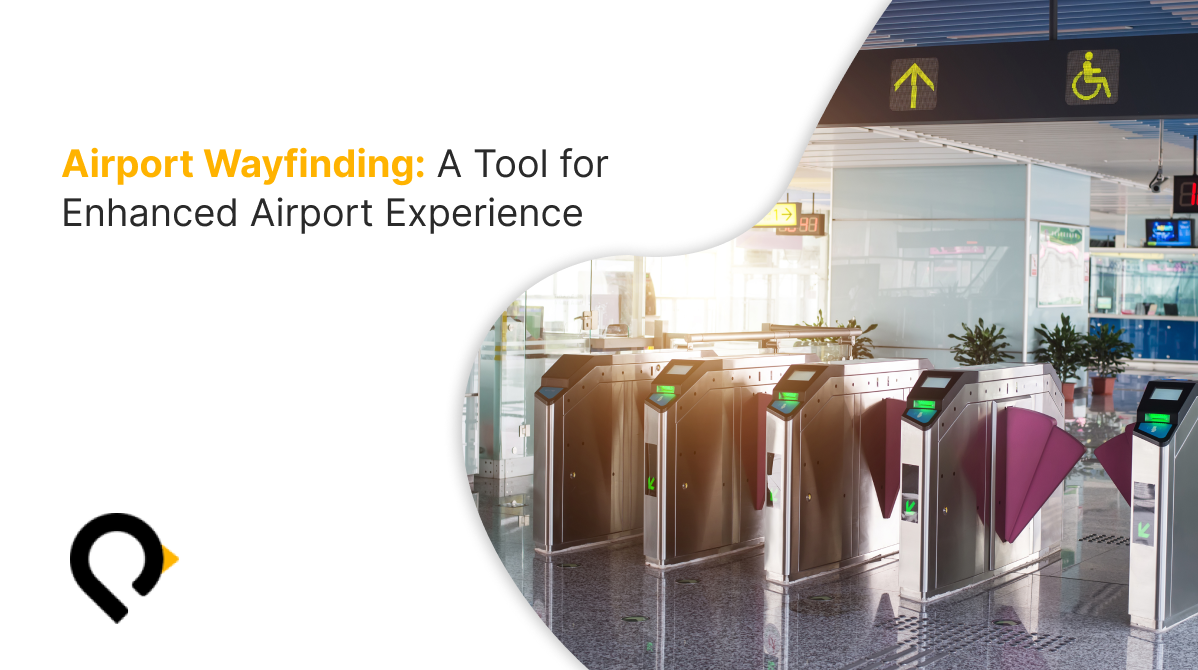
  • Outdoor – Indoor Navigation: Integrated wayfinding technology ensures patients can move seamlessly from parking lots to hospital entrances and directly to their appointments, reducing anxiety and saving time.

  • UWB Positioning Systems: Ultra-wideband precision enables real-time tracking of staff, patients, and assets, ensuring efficiency and safety during critical scenarios like Code Blue emergencies.

These features transform apps into more than digital tools — they become patient engagement platforms powered by AI in location services.

Strategies to Market Your Hospital App

To ensure adoption, hospitals must actively promote their apps. Some proven strategies include:

  • Feature Branding: Spotlight individual features like Outdoor – Indoor Navigation to highlight unique value.

  • Wi-Fi Landing Pages: Encourage downloads when patients connect to hospital Wi-Fi.

  • QR Codes: Simple, instant access to the app store.

  • User Reviews: Build trust by showcasing positive experiences.

  • Staff Advocacy: Train nurses, physicians, and assistants to recommend the app to patients.

  • Print Promotion: Flyers, posters, and cards placed in waiting areas drive awareness.

Penguin Location Services supports hospitals not only with wayfinding technology but also with adoption strategies that increase downloads and ensure lasting engagement.

Partnering with Penguin Location Services

At Penguin Location Services, we specialize in AI in location services, UWB positioning systems, and advanced wayfinding technology that enhance hospital apps. From Outdoor – Indoor Navigation to RTLS-enabled staff tracking, our solutions empower healthcare institutions to deliver better patient experiences and more efficient workflows.

🚀 Ready to enhance your hospital app with next-generation AI-powered location services? Schedule a demo with Penguin Location Services today.

Healthcare Asset Tracking with RTLS: ROI-Driven Patient Safety Solutions

Every year, North American hospitals spend millions of dollars on medical equipment they already own but cannot find. IV pumps sit idle in unused rooms while clinical staff search corridors. Wheelchairs accumulate in discharge areas while patients wait. Infusion pumps get hoarded on high-demand units while other floors run short and submit emergency purchase requests.

The financial and operational cost of this invisible problem is significant — and almost entirely preventable.

This guide explains what RTLS healthcare asset tracking actually delivers in practice, what the ROI data shows from real hospital deployments, and what hospital administrators and clinical engineers need to evaluate when choosing a system.

Table of Contents

The Asset Visibility Problem in Healthcare

The core challenge in hospital asset management is not equipment shortage — it is equipment invisibility. Most acute care hospitals own more medical equipment than their patient census requires. The problem is that a significant portion of that inventory is effectively inaccessible at any given time because nobody knows where it is.

Research from North American hospital deployments consistently documents the same pattern. IV pump utilization rates in facilities without tracking average 30 to 35 percent — meaning two-thirds of owned pumps are sitting idle somewhere in the building, unavailable to clinical staff who need them. Equipment loss and theft add to the problem, but studies show the majority of “lost” assets are simply located in unexpected places: storage rooms that are rarely checked, discharged patient rooms that have not been cleared, or units that have accumulated more than their fair share through informal hoarding.

The Real Cost of Poor Visibility

The financial consequences of poor asset visibility compound across multiple budget lines. Clinical staff spend 20 to 45 minutes per shift searching for missing equipment — time that cannot be recovered or billed. Procurement departments order equipment to replace items that are already on-site but unfindable. Rental companies receive regular calls for temporary equipment that covers shortages caused by poor distribution rather than genuine inventory gaps. Biomedical engineering teams defer preventive maintenance on devices they cannot locate, creating compliance gaps and increasing failure rates.

A study tracking 3,459 infusion pumps across a 1,154-bed hospital found that RTLS achieved 93 percent fleet coverage — near-complete visibility into pump location and movement patterns across the entire facility. The operational changes enabled by that visibility generated documented financial returns across every one of the cost categories above.

The most expensive equipment problem in most hospitals is not theft or damage. It is invisibility. A hospital that cannot see its inventory operates as if it owns far less than it does — and purchases, rents, and staffs accordingly.

Core RTLS Asset Tracking Use Cases in Hospitals

Hospital asset tracking with RTLS delivers value across several distinct operational domains. Understanding which use cases apply to your facility helps build a realistic business case and prioritize implementation.

Equipment Location and Retrieval

The most immediate operational benefit is real-time location visibility. Clinical staff search for the nearest available IV pump, wheelchair, or monitoring device through a dashboard or mobile interface and see its exact room-level location in seconds. What previously took 20 to 30 minutes of corridor searching takes under 60 seconds. Across a full nursing workforce in a 400-bed hospital, this recovery of clinical time is one of the most measurable benefits of any operational technology deployment.

Fleet Management and PAR-Level Monitoring

PAR-level management uses location data to monitor equipment distribution across units in real time. When a unit’s equipment count drops below its defined minimum level, the system generates an automatic alert to logistics staff. Redistribution happens proactively — before a clinical team is scrambling during a patient emergency. Units that are over their PAR level get flagged for redistribution, preventing hoarding before it develops into a site-wide shortage. This is the shift from reactive to proactive asset management that delivers the largest long-term operational improvement.

Preventive Maintenance and Biomedical Engineering

Biomedical engineering teams can locate any device due for inspection or calibration in seconds rather than spending time searching the facility. Usage-based maintenance triggers replace calendar-based scheduling — devices that are heavily used get serviced more frequently, while lightly used devices are not pulled unnecessarily. When a manufacturer issues a recall or safety notice, the RTLS locates every affected device instantly rather than triggering a facility-wide physical search that takes days.

Decontamination Workflow Automation

When location data is combined with decontamination zone detection, cleaning workflows become automated. The system records when a device enters and exits the decontamination area, assigning a digital clean status that staff can verify instantly. Devices that re-enter patient areas without a recorded decontamination event trigger an automatic alert — removing a significant infection control gap that exists in manual tracking systems.

The ROI Case: What the Data Shows

The return on investment from RTLS asset tracking comes from four measurable sources. Most facilities find the combined savings significantly exceed deployment costs within 12 to 18 months.

Capital savings from fleet right-sizing. When tracking reveals actual utilization rates, hospitals consistently find they own more equipment than their census requires — they simply could not use it all because they could not find it. One documented deployment reduced an IV pump fleet from 1,200 to 780 devices after tracking revealed the true utilization picture, saving over $1 million in capital costs. The ongoing savings — reduced maintenance contracts, service agreements, and storage requirements — extend well beyond the initial reduction.

Rental cost elimination. Hospitals that regularly rent mobile equipment to cover for devices they cannot locate spend an average of $75,000 per year per 300 beds on rental fees. RTLS eliminates this cost almost entirely within the first quarter of deployment because owned inventory becomes findable and usable.

Clinical time recovery. At 20 to 45 minutes per shift per nurse spent searching for equipment, the labor cost of poor asset visibility is the largest financial loss — and the one that never appears as a line item in a budget. RTLS deployments that achieve 90-plus percent reduction in equipment search time recover that labor back into direct patient care. This improvement simultaneously increases care quality and throughput.

Equipment loss and theft reduction. Geofencing alerts trigger when equipment approaches or crosses facility boundaries, enabling rapid recovery before devices leave the building permanently. Facilities consistently report 60 to 80 percent reductions in equipment loss after RTLS deployment.

The ROI from hospital asset tracking is not speculative. It comes from four documented sources — fleet right-sizing, rental elimination, time recovery, and loss reduction — each of which delivers measurable financial return within the first year of deployment. The question is not whether it pays back. It is how fast.

Asset Tracking and Patient Safety: The Connection

The connection between asset visibility and patient safety is direct and documented. When critical equipment is unavailable at the point of care — because it is lost, hoarded, or out of service — clinical teams face delays and workarounds that carry patient risk.

A nurse who spends nine minutes searching for an infusion pump before a scheduled medication administration is not just wasting time. That delay affects the patient waiting for the medication, the next patient waiting for the nurse, and the downstream care schedule for the entire unit. Multiply that scenario across hundreds of interactions per shift across a large hospital and the cumulative clinical impact becomes significant.

RTLS asset tracking directly addresses patient elopement risk through a related mechanism. Wander prevention and asset tracking run on the same sensor infrastructure — the same BLE locators that track IV pump locations also support patient monitoring tags that alert staff when at-risk patients approach exits. This is one of the clearest examples of how a single infrastructure investment delivers value across multiple patient safety domains simultaneously.

Patient throughput is the other documented connection. By minimizing equipment search time and ensuring assets are distributed according to patient census, RTLS-enabled facilities consistently demonstrate improved bed turnover rates. A 15 percent improvement in patient throughput, documented in multiple case studies, translates to meaningful annual revenue growth for facilities operating near capacity.

Workflow and Staff Productivity Impact

The workflow impact of RTLS asset tracking extends well beyond equipment search time. The most operationally mature deployments use location data as the foundation for a set of automated workflows that change how hospitals manage their entire equipment lifecycle.

CMMS Integration

Integration with Computerized Maintenance Management Systems is one of the highest-value workflow improvements RTLS enables. When a device is due for inspection, the CMMS queries the RTLS for its current location. The biomedical engineer receives an alert with the device’s exact room-level location and walks directly to it. Usage-based scheduling replaces calendar-based scheduling. The documentation is generated automatically from the system’s location and maintenance logs — producing the audit-ready records that Joint Commission surveyors require without additional work from clinical engineering staff.

Staff Workflow Optimization

Location data from RTLS workflow tracking reveals patterns in how staff move through a facility — which units generate the most equipment requests, which time periods produce the most search activity, which staff roles spend the most time on non-clinical tasks. These patterns support staffing decisions, unit layout improvements, and supply chain adjustments that reduce friction without requiring changes to clinical protocols.

Infection Control and Compliance Support

Healthcare-associated infections (HAIs) represent one of the most significant patient safety and financial risks in hospital operations. RTLS asset tracking supports infection control through two primary mechanisms.

Decontamination workflow automation — described above — ensures that equipment moving between patients has a documented cleaning record before re-entering clinical use. This removes a systematic gap in manual tracking systems where the question “has this device been cleaned?” depends on paper logs and staff memory rather than automated verification.

Contact tracing capability is the second mechanism. By tracking the movement of both equipment and, where patient monitoring is deployed, people, RTLS systems can reconstruct the contact patterns of any individual — patient or staff member — involved in a potential outbreak. The ability to identify who had contact with a contaminated device or individual in hours rather than days is a capability that traditional tracking methods cannot approach.

The hand hygiene compliance application connects directly to this. Real-time monitoring of handwashing compliance at entry and exit points, combined with location data showing which patients and equipment a staff member interacted with, creates the closed-loop infection control documentation that accreditation bodies increasingly expect.

What to Evaluate When Choosing an RTLS Asset Tracking System

The technology landscape for hospital asset tracking includes a range of options with meaningfully different accuracy levels, infrastructure requirements, and total cost profiles. Here is what the evaluation should focus on:

Accuracy level for your specific use cases. Zone-level accuracy tells you which floor an asset is on. Room-level accuracy tells you which specific room it is in. Sub-room accuracy distinguishes which bay or shelf within a room. For the core asset tracking use cases — staff search, fleet management, decontamination tracking, maintenance scheduling — room-level accuracy is the right target. It delivers full operational benefit at manageable infrastructure density. Sub-room accuracy adds value in ICUs and multi-bay areas but is not required across an entire facility.

Infrastructure requirements and compatibility. Systems that operate on existing enterprise Wi-Fi infrastructure (Cisco Meraki, Aruba, Juniper Mist) eliminate the need for parallel hardware deployment and dramatically reduce implementation cost and timeline. Penguin’s PenTrack platform uses BLE 5.1 with patented Direction Finding algorithms that deliver consistent room-level accuracy on existing network infrastructure — without requiring dedicated RTLS hardware across the facility.

Total cost of ownership across all use cases. The most significant cost decision in RTLS is not the per-device tag price or the software subscription — it is whether you deploy separate infrastructure for each safety and tracking application or a single platform that supports all of them. The sensor network is the expensive component. A facility that deploys one BLE 5.1 infrastructure for asset tracking, staff duress, patient monitoring, and hand hygiene compliance pays for one network. A facility that deploys separate systems for each application pays for four.

Integration with existing clinical systems. RTLS systems that connect to nurse call platforms, CMMS, and EHR systems deliver more value and require less workflow change than systems that operate in isolation. Evaluate whether the platform’s integration capabilities match your specific technology environment before committing.

Vendor experience in healthcare environments. Hospital deployments are technically and operationally complex. RF environments in healthcare facilities — dense with wireless devices, metal equipment, and thick walls — are genuinely challenging for location accuracy. Vendors with documented deployments in comparable hospital environments are meaningfully different from those presenting lab-tested specifications.

Frequently Asked Questions

The following questions represent the most common queries from hospital administrators, clinical engineers, CFOs, and procurement teams evaluating RTLS asset tracking systems.

Q: What is the ROI of RTLS asset tracking in hospitals?

The ROI of hospital RTLS asset tracking comes from four documented sources: capital savings from fleet right-sizing (typically 20 to 35 percent reduction in owned inventory once utilization is visible), rental cost elimination (average $75,000 per year per 300 beds), clinical time recovery from reduced equipment searches (20 to 45 minutes per nurse per shift), and equipment loss reduction (60 to 80 percent reduction documented in deployed facilities). Most hospitals achieve full ROI within 12 to 18 months of deployment. One documented deployment reduced an IV pump fleet from 1,200 to 780 devices after tracking revealed actual utilization, saving over $1 million in capital costs alone.

Q: What types of hospital equipment should be tracked with RTLS?

The highest-value assets to track first are mobile devices that are frequently needed, frequently moved, and frequently searched for: IV pumps and infusion devices, portable patient monitors, wheelchairs and mobility aids, ventilators, ECG machines, and ultrasound units. These are the devices generating the most staff search time and the most emergency rental requests. After the initial deployment demonstrates ROI, tracking can be extended to lower-value assets like IV poles, carts, and specialty equipment. The tagging strategy should prioritize assets based on search frequency and replacement cost, not total inventory size.

Q: How accurate does RTLS need to be for hospital asset tracking?

For the core asset tracking use cases — staff search, fleet management, decontamination tracking, and maintenance scheduling — room-level accuracy is both sufficient and appropriate. Room-level means the system identifies which specific room a device is in, allowing clinical staff to walk directly there and retrieve it in under 60 seconds. Zone-level accuracy (floor or wing) is not sufficient for rapid retrieval. Sub-room accuracy (specific bay or shelf within a room) adds value in ICUs and large multi-bay spaces but is not required across an entire facility to achieve full operational benefit.

Q: How does RTLS asset tracking support Joint Commission compliance?

RTLS asset tracking supports Joint Commission compliance in three ways. First, automated preventive maintenance scheduling ensures that devices are serviced on time — the CMMS queries the RTLS for a device’s current location when maintenance is due, eliminating deferred maintenance caused by inability to locate the device. Second, the system generates a complete, timestamped audit trail of every device’s location history, decontamination status, and maintenance events — providing the medical device management documentation Joint Commission surveyors require without additional manual effort. Third, automated recall response allows biomedical teams to locate every affected device in minutes when a manufacturer issues a safety notice, with documentation generated automatically for compliance reporting.

Q: Can the same RTLS infrastructure support asset tracking and patient safety applications?

Yes — and deploying them on a single shared infrastructure is significantly more cost-effective than separate systems. Penguin’s PenTrack platform runs on the same BLE 5.1 sensor infrastructure as PenSafe staff duress alerting, patient wander and elopement prevention, and hand hygiene compliance monitoring. A hospital that deploys one BLE 5.1 network for asset tracking already has the infrastructure for all of these applications — adding them is a software and tag deployment, not a new hardware project. This consolidated model delivers a meaningfully lower total cost of ownership than deploying dedicated infrastructure for each use case separately.

Q: How long does RTLS asset tracking implementation take in a hospital?

A typical deployment covering a 300 to 400-bed hospital takes four to eight weeks from kickoff to go-live. The timeline depends primarily on three factors: whether existing enterprise Wi-Fi infrastructure (Cisco Meraki, Aruba, Juniper Mist) can serve as the primary reader network (reducing hardware installation time significantly), the size of the initial asset fleet to be tagged, and the complexity of integration with existing nurse call and CMMS systems. Staff training for the search dashboard and mobile interface is typically completed in a single one-hour session per unit. Most facilities begin seeing measurable search time reduction within the first week of go-live.

Penguin Location Services delivers hospital asset tracking through PenTrack, built on BLE 5.1 technology with patented Direction Finding algorithms for consistent room-level accuracy. PenTrack runs on the same sensor infrastructure as PenSafe staff safety and patient monitoring applications — one deployment, multiple use cases. Learn more at penguinin.com/asset-tracking or request a demo.

Exploring BLE 5.1 and Ultra-Wideband (UWB) Technologies for Real-Time Location Systems

In the world of indoor tracking and positioning, advanced technologies are transforming the way healthcare organizations and enterprises optimize their operations. Two leading technologies in this space are Ultra-Wideband (UWB) and Bluetooth Low Energy (BLE) 5.1.

Penguin Location Services, a leader in RTLS for healthcare, develops innovative real-time location systems that enhance asset tracking, patient flow, and staff safety. In this article, we compare UWB and BLE 5.1 for RTLS systems in healthcare, exploring how each impacts accuracy, coverage, power consumption, and ecosystem compatibility.

Understanding Ultra-Wideband (UWB)

UWB is a short-range wireless communication technology that uses low power levels across wide frequency bands. It provides highly accurate positioning, achieving sub-meter precision even in complex indoor spaces such as hospitals.

For healthcare tracking systems RTLS, UWB enables precise locationing of critical medical equipment, staff, and patients. Its resistance to interference and multipath effects makes it especially effective in busy hospital environments.

Exploring Bluetooth Low Energy (BLE) 5.1

BLE 5.1 is an advanced evolution of Bluetooth designed for low power consumption and extended range. It uses techniques like Angle of Arrival (AoA) and Angle of Departure (AoD) to improve localization accuracy.

For RTLS healthcare applications, BLE 5.1 offers cost-effective, scalable solutions for tracking assets, monitoring staff movement, and improving patient flow. BLE’s range, ease of deployment, and integration with existing infrastructure make it highly suitable for large hospital systems.

Comparing UWB and BLE 5.1 for RTLS in Healthcare

Accuracy and Precision

  • UWB provides exceptional sub-meter accuracy, ideal for surgical instrument tracking or infant protection systems.

  • BLE 5.1 has also achieved near sub-meter accuracy, making it a competitive choice for most healthcare RTLS systems.

Range and Coverage

  • BLE 5.1 supports coverage up to 300 meters, making it effective for hospital-wide deployments.

  • UWB is limited to around 100 meters but excels in dense or interference-heavy areas.

Power Consumption

  • BLE 5.1 is extremely energy-efficient, supporting long battery life for wearables and IoT sensors used in healthcare.

  • UWB consumes more power, which can limit its practicality for battery-operated hospital tags.

Interoperability and Ecosystem

  • BLE 5.1 benefits from broad adoption and compatibility with existing Bluetooth infrastructure, reducing integration costs for RTLS healthcare systems.

  • UWB adoption is growing but still requires more specialized hardware.

Conclusion

Both UWB and BLE 5.1 bring strong advantages to RTLS for healthcare. While UWB offers unmatched accuracy, BLE 5.1 provides a balance of accuracy, cost-effectiveness, and ecosystem maturity—making it ideal for scalable healthcare tracking systems RTLS.

At Penguin Location Services, we deliver intelligent RTLS solutions that leverage BLE 5.1 today while ensuring a future-ready path toward UWB adoption. Our AI-powered algorithms ensure sub-meter accuracy and workflow optimization in hospitals and healthcare environments.

If you’re looking to enhance patient safety, staff efficiency, or asset utilization through RTLS systems in healthcare, contact us at [email protected] to learn more about our BLE-based development kits, products, and services.

CBAHI – Focus Areas and Solutions

CBAHI Focus Areas and Smart Solutions for Saudi Healthcare Excellence

Under the rigorous monitoring of the Central Board for Accreditation of Healthcare Institutes (CBAHI), Saudi Arabia is transforming healthcare standards across all medical institutions. This evolution ensures alignment with the Kingdom’s Vision 2030, driving unprecedented quality improvements in patient care and facility management.

In this article, we explore key CBAHI accreditation standards and demonstrate how Penguin’s innovative technology solutions help healthcare facilities not only achieve compliance but excel in service quality and operational efficiency.


Executive Leadership: Technology-Driven Decision Making

Key Performance Indicators for Healthcare Executives

CBAHI has identified critical focus areas for executive leadership:

  • Supply Chain Excellence: Ensuring seamless provision of medicines, equipment, and medical supplies throughout the facility
  • Quality Collaboration: Working across all departments to elevate care standards and operational protocols
  • Facility Infrastructure: Continuous monitoring and evaluation of building conditions and maintenance needs
  • Resource Optimization: Minimizing waste of valuable medical resources and supplies

The Power of Real-Time Data

Modern technology empowers executives through automated monitoring and intelligent reporting across all facility operations. Access to real-time data enables faster, more informed decision-making on critical metrics including:

  • Asset utilization rates
  • Staff attendance compliance
  • Facility maintenance schedules
  • Practitioner response times

Penguin’s comprehensive platform provides executives with the tools needed to build ROI-driven strategies based on actionable insights and accurate data.

Infection Control: Revolutionizing Hand Hygiene Compliance

CBAHI’s Enhanced Requirements

The ESR CBAHI standards place renewed emphasis on infection prevention through stringent hand hygiene protocols:

  • Governance Structure: Establishment of a multidisciplinary committee providing oversight of infection prevention and control programs
  • Standardized Procedures: Implementation of comprehensive sterilization, disinfection, and hand cleaning compliance protocols
  • Resource Management: Proper use and adequate provision of infection prevention equipment and supplies

Beyond Compliance: Measurable Hand Hygiene

Hand hygiene has rightfully become the cornerstone of any effective infection control program. As Dr. Mohammed Smadi, CEO of Penguin, notes:

“A key use case that has tangible ROI is hand hygiene compliance. Being able to know who went where and when are keys to ensuring that compliance rules are adhered to.”

Dr Mohammed Smadi, CEO of Penguin.

Smart Solutions for Existing Infrastructure

Through dedicated research and strategic partnerships, Penguin has developed cost-effective retrofit solutions that upgrade existing dispensers with advanced compliance tracking capabilities. Benefits include:

  • Individual and ward-level compliance monitoring
  • Automated dispenser replenishment workflows
  • Real-time utilization tracking and reporting
  • Seamless integration with existing infrastructure

Patient Experience and Safety: A Technology-Enhanced Approach

The Foundation of Patient-Centric Care

Patient centricity stands as a fundamental pillar of CBAHI accreditation, with safety and experience as primary drivers. CBAHI standards emphasize:

  • Verification Protocols: Processes to prevent wrong patient, wrong site, and wrong procedure incidents
  • Identity Assurance: Systems ensuring correct patient identification at all touchpoints

Real-Time Tracking for Enhanced Safety

Penguin’s intelligent tracking solutions add crucial layers of compliance and traceability, significantly reducing unintentional errors. Our platform enables:

  • Real-time patient and staff location tracking
  • Schedule adherence monitoring
  • Physical area access verification
  • Complete audit trails for historical review and analysis

Digital Wayfinding: Reducing Errors and Improving Experience

To minimize medical errors, ESR CBAHI mandates clear navigation systems including accessible wayfinding for authorized staff and prominent information points at facility entrances.

Penguin’s Digital Wayfinding Solution offers:

  • Customizable multilingual directory listings
  • Easy content updates and modifications
  • Targeted infotainment messaging for patients and departments
  • Significant reduction in missed appointments
  • Integration with patient reminder systems
  • Measurably improved patient satisfaction scores

Medical Asset Management: Complete Supply Chain Visibility

CBAHI’s Comprehensive Asset Requirements

Healthcare facility management must ensure:

  • Timely provision of all medical supplies
  • Storage according to manufacturer specifications and optimal conditions
  • Regular inspection procedures and quality checks
  • Protection of supplies from theft, damage, or unauthorized access
  • Proper disposal of damaged and expired materials
  • Systematic reduction of resource waste

PenTrack: Intelligent Asset Intelligence

Effective medical asset tracking and management are essential for patient safety, cost reduction, regulatory compliance, and enhanced care quality. Penguin’s “PenTrack” family of products delivers:

    • Precision Location: Pin-point asset positioning throughout your facility
    • Proximity Awareness: Real-time tracking of equipment and supplies
    • AI-Powered Analytics: Advanced indoor analytics with intelligent data interpretation
    • Business Rules Engine: Automated actions triggered by specific conditions
    • Proactive Alerts: Instant notifications for critical asset events

Dental Clinic Standards: Specialized Safety Solutions

Critical Requirements for Dental Facilities

CBAHI dental clinic standards mandate:

  • Active staff health and safety programs
  • Immediate and consistent sanitation for healthcare providers and equipment

Comprehensive Protection Solutions

Penguin’s specialized solutions address these requirements with:

    • Duress Call Systems: Immediate emergency response for medical staff safety and security
    • Equipment Tracking: Real-time monitoring of dental instruments and machinery
    • Easy Deployment: Utilization of existing Wi-Fi infrastructure or simple on-premises BLE/Bluetooth solutions
    • Top-Rated Performance: Proven implementation success across multiple facilities

Operational Readiness: Advanced Tracking Systems

Critical Monitoring Capabilities

Modern healthcare facilities require sophisticated tracking systems for:

  • Neonatal Security: Protection against infant abduction with real-time monitoring
  • Sterilization Verification: Complete tracking of medical equipment sterilization cycles
  • Nurse Safety and Efficiency: Support for nurse calling systems and staff security protocols
  • Equipment Management: Monitoring dwell times in dirty and clean utility rooms
  • Maintenance Scheduling: Facility manager tools for tracking and scheduling preventive maintenance

Penguin’s Commitment to Healthcare Excellence

These are transformative times for healthcare technology. Penguin is proud to partner with healthcare providers throughout Saudi Arabia, delivering innovative solutions that address today’s most pressing challenges while preparing facilities for tomorrow’s opportunities.


About Penguin Location Services

Penguin is a leading indoor positioning and IoT solutions provider, headquartered in Irvine, California, with a regional office in Dubai. The company creates digital parallels for physical spaces, optimizing day-to-day processes and creating unique experiences for visitors and operators.

Penguin leverages all available radio and sensor information to provide state-of-the-art indoor positioning technology that builds ROI-driven use cases. Our solutions have proven successful in some of the world’s most challenging and demanding healthcare environments.

About CBAHI

The Saudi Central Board for Accreditation of Healthcare Institutions (CBAHI) is the official agency authorized to grant accreditation certificates to all governmental and private healthcare facilities operating in Saudi Arabia.

Established by the Saudi Health Council as a non-profit organization, CBAHI’s Essential Safety Requirements (ESR) set the healthcare quality and patient safety standards against which all healthcare facilities are evaluated for compliance evidence.

References

  1. QM.18, ESR Book, National Essential Safety Requirements by CBAHI
  2. QM.17, ESR Book, National Essential Safety Requirements by CBAHI
  3. IPC.4, ESR Book, National Essential Safety Requirements by CBAHI
  4. CBAHI Official Twitter Account: https://twitter.com/Cbahi_SA


CBAHI – A Saudi Approach to Improved Healthcare

CBAHI – A Saudi Approach to Improved Healthcare Through Smart Technology

Saudi Arabia is transforming its healthcare sector through privatization. Moreover, this transformation occurs under tight monitoring by the Saudi Central Board for Accreditation of Healthcare Institutes (CBAHI).

CBAHI aims to improve the patient, staff and visitor safety, service level and experience offered by all accredited institutes in the Kingdom. Additionally, it mandates the availability of tools to report errors during the service offering process.

Penguin’s CBAHI Compliance Solutions

Penguin has been refining its solutions to offer healthcare facilities tools that help satisfy such CBAHI accreditation requirements. Our solutions address key areas:

Preventing and Reporting Medical Errors and Improving Safety:

  • Ensuring that surgery is always done at the right place
  • Moreover, giving a newborn to the correct parents
  • Newborn safety using electronic tagging immediately from birth
  • Furthermore, ensuring compliance with infection control standards

Improving Patient Experience:

  • Offering external and internal wayfinding signage to assist in navigation
  • Additionally, this includes a navigate from home to clinic feature
  • Clear access and egress wayfinding for authorized hospital staff
  • Furthermore, availability of wayfinding boards and enquiry points at entrances

Enhancing Operational Readiness:

  • Neonatal tracking system to protect against abduction
  • Moreover, tracking the sterilization of medical equipment
  • Nurse tracking to support nurse calling systems and nurse safety
  • Additionally, equipment dwell times in dirty and clean rooms
  • Furthermore, system to support facility managers in tracking and scheduling maintenance for medical equipment

Supporting CBAHI Standards in Saudi Healthcare

These are interesting times. Moreover, Penguin is proud to be working with healthcare providers in Saudi Arabia to address these CBAHI compliance challenges.

To learn more about how Penguin can help your facility meet CBAHI accreditation standards, please send us an email to [email protected]


Advanced Nurse Duress Solution

How Can Our Advanced Nurse Duress Solution Help Create a Safer Healthcare Workplace?

Due to incidents against nurses and frontline workers in the health sector, government authorities immediately responded to secure a safer work environment by initiating dedicated workplace violence prevention laws to address any abusive and violent behavior by patients or guests against medical staff, which was commendable. Such incidents are shocking particularly to the nursing community causing mental and psychological stress that they can do without, highlighting the urgent need for a comprehensive nurse duress solution.

As the frontline healthcare workers who are always putting us first in a time of need, we owe it to them to try and put nurse safety systems and protective solutions in place to prevent such incidents from happening again.

The question is: is there a simple yet effective nurse duress solution that can address this need specifically, and actually prevent any violent threats from escalating?

The answer is, yes; our RTLS Nurse Duress Solution – with just a press of a button – provides accurate real-time location information and easy-to-access duress buttons located directly on staff badges, allowing healthcare professionals to signal for help immediately from wherever they are. The location of the tag is also tracked to provide security personnel the exact location of the nurse when our nurse duress solution is activated, ensuring rapid emergency response.

Such a simple yet creative nurse duress solution that does not interfere with the workflow in a hospital may provide nurses with an additional sense of safety and show them that healthcare sector leaders do indeed care about implementing effective nurse safety systems.

To learn more about how Penguin’s comprehensive can help healthcare staff and secure a safer environment for frontline healthcare workers, please reach out to [email protected]


Never miss an update!

Subscribe to our quarterly newsletter

We'll never share your email with anyone else.