
Workforce Safety with AI-Powered Location Intelligence

Announcement icon Our AI + Operational Intelligence White Paper is ready now! Click here to download .

Workforce Safety with AI-Powered Location Intelligence

PenSafe for Oil & Gas: AI-Powered Workforce Safety

The oil and gas industry operates in extreme environments. Workers face risks daily on offshore platforms and desert pipelines. Even small delays in emergency response can have serious consequences. Therefore, workforce safety is critical. It drives operational continuity and maintains reputational trust.

Penguin Location Services brings PenSafe to the oil and gas sector. Our platform uses AI-powered location intelligence. It transforms how companies protect their people. Additionally, it monitors safety events and enables real-time incident response.

Why Oil & Gas Needs PenSafe

Legacy safety systems have limitations. They rely on static protocols and radio check-ins. They offer only reactive alerts. However, in this industry, every second counts. Companies need better solutions.

PenSafe changes everything. It offers real-time visibility and proactive alerts. Furthermore, it provides location-aware automation that adapts to field conditions. The system enables a smarter approach to worker safety. It uses AI, IoT, and geospatial awareness to prevent incidents before they escalate.

Key Features of PenSafe for Oil & Gas

✅ Real-Time Location Tracking

Know where your workforce is at all times. This includes vast sites, remote rigs, and pipeline corridors. PenSafe uses smart wearable devices for continuous monitoring. Consequently, you can ensure accountability across zones, shifts, and safety protocols.

✅ Automated Safety Alerts & Escalations

The system detects multiple risk scenarios. These include falls, lack of movement, and restricted zone entries. When risks occur, PenSafe triggers instant alerts. Moreover, it can auto-escalate based on pre-set conditions. This ensures supervisors receive notifications immediately when thresholds are crossed.

✅ AI-Powered Risk Detection

PenSafe goes beyond basic tracking. It uses predictive analytics to identify risk patterns. For example, it can detect heat stress zones and hazardous area congestion. Additionally, it flags unusual movement behaviors. This intelligence helps prevent incidents proactively.

✅ Audit-Ready Safety Logs

PenSafe creates comprehensive digital safety logs. These include timestamped records of compliance and incident response. They also document near-miss events. This supports regulatory compliance effectively. Furthermore, it enables smarter post-incident reviews and continuous improvement.

From Reactive to Predictive: The Future of Workforce Safety

Traditional incident management is reactive. Companies respond after accidents occur. However, PenSafe offers a better approach. What if your system could predict risk instead?

This is the advantage PenSafe brings. It combines AI algorithms with real-time location data. Consequently, oil and gas companies can prevent accidents rather than just react to them. This represents a fundamental shift. Safety transforms from a cost center into a strategic investment.

Designed for Harsh Environments, Built for People

PenSafe delivers more than just technology. It builds trust. Our ruggedized devices withstand extreme conditions. Our infrastructure remains resilient under pressure. Meanwhile, our intuitive dashboards enable easy adoption.

Safety teams get the data they need. Workers get the peace of mind they deserve. Everyone benefits from this approach.

Make Safety Your Competitive Advantage

In oil and gas, safety and productivity work together. PenSafe helps energy companies elevate their standards. It reduces incident response times significantly. Moreover, it creates a culture of proactive protection. All of this is powered by AI and location intelligence.

Is your team ready to upgrade? Move beyond static safety protocols. Embrace smart, responsive systems instead. PenSafe is ready to lead the way.

Reflections from ViVE 2025

ViVE 2025 brought together healthcare technology leaders from across North America in Nashville for three days of conversation about where the industry is headed. The weather was rough — it kept some attendees away — but the discussions that did happen were substantive and revealing.

For Penguin, ViVE is valuable not just as a conference but as a real-time reading of where hospital decision-makers are in their thinking. What are they actually worried about? What problems are they trying to solve right now? What technology are they ready to buy and what are they still skeptical about?

Here is what stood out.

Table of Contents

The RTLS Conversation Has Matured

Real-Time Location Systems are no longer a new concept in healthcare. Most mid-sized and large hospital systems have at least evaluated RTLS — and a growing number have deployed it in some form. What has changed is the depth of the conversation.

Three years ago the typical ViVE conversation about RTLS in healthcare started with the basics — what is it, how does it work, what does it cost. At ViVE 2025, those conversations were largely gone. The people we spoke with already understood the technology. They were asking second-generation questions: how do we get more value out of what we have already deployed? How do we move from location data to operational decisions? How do we connect RTLS to the systems our clinical teams actually use?

This is a meaningful shift. It means the market for basic asset tracking is maturing and the opportunity for more sophisticated applications — workflow optimization, staff safety analytics, predictive maintenance — is opening up. Hospitals that deployed RTLS for equipment tracking are now asking what else that infrastructure can do.

From Tracking to Intelligence

The phrase that came up repeatedly in conversations was “location intelligence” — the idea that knowing where something is matters less than understanding what that location data means for operations. A hospital that tracks IV pumps knows where its equipment is. A hospital that analyzes IV pump movement patterns knows which units are hoarding, which are understaffed, and where the next shortage will happen before it does.

That is the direction the market is moving. PenTrack is built around exactly this model — not just real-time location, but operational intelligence derived from location patterns over time.

AI in Healthcare: The Shift from Hype to Practical Questions

Artificial intelligence was present at every conversation at ViVE 2025 — but the tone was different from previous years. The broad, futuristic narratives about AI transforming healthcare have given way to something more grounded: hospital leaders asking where AI is actually delivering value today, not in theory.

The question we heard most often was not “what can AI do?” It was “show me where it is working in a real hospital right now.”

Where AI Delivers Real Value in Hospitals

The applications generating genuine interest — as opposed to general curiosity — were narrow and specific. Predictive maintenance scheduling. Automated anomaly detection in equipment utilization. Pattern recognition in staff movement data that surfaces workload imbalances before they affect patient care.

These are not headline-grabbing AI applications. They are unglamorous, operationally specific uses of machine learning that save time and reduce errors in ways that clinical staff can actually feel. That is precisely what hospital buyers are responding to right now.

Penguin’s approach to AI sits in this space. Our location engine uses AI-enhanced positioning algorithms to deliver sub-room accuracy — not as a product feature but as the foundation that makes every downstream application more reliable.

Trust Is Still the Barrier

The consistent theme across AI conversations at ViVE was trust. Hospital leaders are not skeptical of AI in principle — they are skeptical of AI outputs they cannot explain to clinical staff or validate against their own operational experience. Systems that surface recommendations without showing their reasoning, or that require staff to act on alerts they do not understand, face significant adoption resistance regardless of their technical accuracy.

The AI tools that are gaining traction are the ones that augment human judgment rather than replace it — giving clinicians and administrators better information, not automated decisions they are expected to implement without question.

Workforce Support Is the Underrated Use Case

Healthcare staffing remains one of the most acute operational challenges in the industry. Every hospital system at ViVE was dealing with some version of it — burnout, turnover, recruitment costs, and the downstream effects on patient care quality and throughput.

What surprised us was how often RTLS came up in workforce conversations — not as a monitoring or surveillance tool, but as a support mechanism. The use case generating the most genuine interest was using location data to understand workload distribution: which nurses are covering the most ground, which units are consistently understaffed at specific times, which staff members are spending the most time on non-clinical tasks like equipment searches.

This framing — RTLS as a tool for supporting staff rather than monitoring them — matters enormously for adoption. Clinical staff are far more receptive to location technology when they understand it as something that reduces their burden rather than tracks their movements.

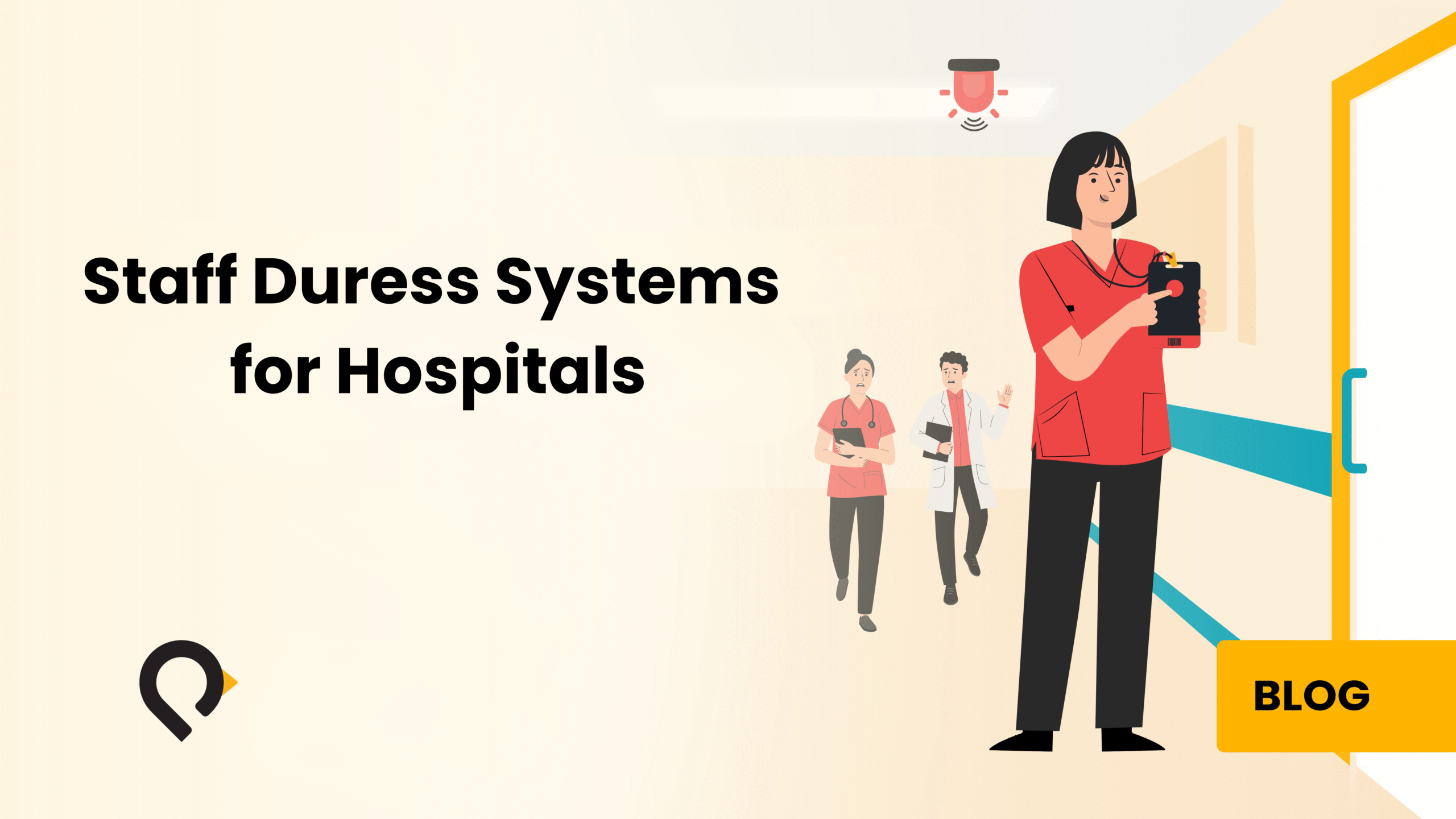
Workforce safety and PenSafe staff duress alerting fit directly into this framing. A nurse who can press a button and have security respond to their exact location in seconds is not being monitored — they are being protected. That distinction drives adoption in a way that surveillance framing never does.

Hospital Wayfinding: Still Underestimated, Still Important

One of the most grounded conversations at ViVE was about something deceptively simple: helping people find their way around hospitals.

Large hospital campuses are genuinely difficult to navigate. Patients miss appointments. Families get lost and arrive at clinical interactions already stressed. Staff spend meaningful time directing visitors instead of delivering care. The cumulative operational cost of poor wayfinding — in time, in patient satisfaction scores, in staff frustration — is significant and largely invisible because it never appears as a line item.

What is changing is that hospital leadership is starting to connect wayfinding directly to patient experience metrics that matter to their accreditation and reimbursement. A patient who arrives at their appointment on time and without stress is more likely to rate their overall experience positively — and that rating affects outcomes that hospitals are measured on.

PenNav addresses this directly. Turn-by-turn indoor navigation that works on a visitor’s existing mobile device — no app download, no new hardware — gives hospitals a patient experience improvement that is both affordable and immediately measurable.

For all the complexity in healthcare technology, sometimes the highest-value improvement is the one that helps someone find Room 412 without asking four different people. The ROI on wayfinding is underestimated precisely because the problem is so familiar that it feels unsolvable.

The Integration Problem Has Not Gone Away

If there was one consistent frustration across every technology conversation at ViVE 2025, it was integration. Hospital technology ecosystems are complex, fragmented, and expensive to connect. Every new system — no matter how valuable — adds to the integration burden on IT teams that are already stretched.

The hospitals generating the most interest in RTLS adoption were those looking for platforms that connect to existing infrastructure rather than require parallel deployments. The question was consistently: can this run on our existing Cisco Meraki network? Can it connect to our nurse call system? Does it integrate with our EMR?

Penguin’s platform is built around this reality. Our Cisco Meraki integration means hospitals that have already invested in Meraki networking can layer location intelligence on top of that investment without a separate infrastructure project. The sensor network is already there — Penguin turns it into a location intelligence platform.

This is not a minor technical point. For hospital IT teams evaluating RTLS, “runs on your existing network” is the difference between a six-month procurement process and a conversation that moves forward.

The Takeaway from ViVE 2025

The healthcare technology market in 2025 is past the early-adopter phase on most of the technologies that were experimental five years ago. RTLS is established. AI is moving from pilots to production. Digital wayfinding is becoming a patient experience expectation rather than a differentiator.

What that means for hospital buyers is that the evaluation criteria have shifted. The question is no longer whether a technology works. It is whether it works in your environment, connects to your existing systems, generates ROI you can demonstrate to your CFO, and does not add to your IT team’s burden.

Those are the conversations Penguin is built for. We work with hospitals that are serious about operational efficiency and patient safety — not hospitals buying technology to check a box. If you were at ViVE and want to continue the conversation, or if you are evaluating RTLS for your hospital, we would welcome the opportunity to show you how our platform works in a real hospital environment.

Penguin Location Services delivers AI-powered location intelligence through PenNav (indoor navigation), PenTrack (asset tracking and workflow), and PenSafe (staff safety and patient monitoring) on a single BLE 5.1 infrastructure. Learn more at penguinin.com/healthcare or request a demo at penguinin.com/contact.

Frequently Asked Questions

Q: What is ViVE and why does it matter for healthcare technology?

ViVE is one of the largest annual healthcare technology conferences in North America, bringing together hospital executives, technology vendors, and clinical leaders to discuss operational challenges and emerging solutions. It matters because the conversations at ViVE reflect where hospital decision-makers are in their actual buying and implementation cycles — not where vendors wish they were. Conference attendance and the depth of conversations around specific topics are reliable indicators of where the market is heading in the following 12 to 18 months.

Q: How is AI being used in hospitals right now?

The AI applications generating genuine adoption in hospitals in 2025 are narrow, operationally specific, and focused on augmenting human judgment rather than replacing it. Predictive maintenance scheduling for medical equipment, anomaly detection in asset utilization patterns, workload distribution analysis for nursing staff, and pattern recognition in patient flow data are the areas where hospitals are seeing measurable returns. Broad, generalized AI platforms that promise to transform entire workflows are generating skepticism — hospitals want to see demonstrated value in specific, bounded use cases before committing to wider deployment.

Q: What is the connection between RTLS and AI in healthcare?

RTLS generates the continuous, real-time location data that AI algorithms need to identify patterns and surface operational insights. Without accurate, reliable location data, AI models cannot accurately predict equipment shortages, identify workflow bottlenecks, or flag safety risks before they materialize. The quality of the location data directly determines the quality of the AI output — which is why the accuracy of the underlying RTLS infrastructure matters more than the sophistication of the AI layer built on top of it. Penguin’s BLE 5.1 platform is designed to deliver the sub-room accuracy that makes downstream AI applications reliable rather than approximate.

Q: Why is hospital wayfinding considered an RTLS use case?

Indoor navigation for patients and visitors requires knowing where the person currently is and mapping a route to their destination — both of which depend on indoor positioning technology. In a hospital environment where GPS does not function reliably indoors, BLE-based positioning provides the real-time location data that powers turn-by-turn navigation. The same sensor infrastructure deployed for asset tracking and staff safety can support patient and visitor wayfinding without additional hardware — which is one reason hospitals with existing RTLS deployments increasingly add indoor navigation as an incremental use case rather than a separate system.

Q: How does RTLS support healthcare workforce safety?

RTLS supports workforce safety through two primary mechanisms. First, staff duress alerting — wearable badges with panic buttons that, when pressed, immediately notify security with the staff member’s exact room-level location. This gives healthcare workers a reliable way to summon help in dangerous situations without escalating the situation through overhead announcements. Second, workload analytics — using location pattern data to identify which staff members and units are consistently overloaded, enabling proactive staffing decisions rather than reactive responses to burnout and turnover. Both applications run on the same BLE sensor infrastructure, making them cost-effective additions to an existing RTLS deployment.

How Healthcare RTLS Technology Transforms Emergency Department Operations

In the high-pressure environment of an Emergency Department (ED), every second counts. EDs are often chaotic. Patients arrive in critical condition. Clinicians juggle multiple cases. Medical equipment is frequently in use across different areas.

Consequently, delays in locating essential personnel or resources can lead to workflow disruptions. Moreover, these delays cause prolonged patient wait times. In some cases, they even result in adverse health outcomes.

This is where Healthcare RTLS (Real-Time Location Systems) comes into play. By leveraging healthcare RTLS technology, EDs can improve workflow efficiency. Additionally, they reduce bottlenecks and enhance the overall patient experience.

Enhancing ED Workflow and Reducing Delays

Emergency physicians, nurses, and technicians face constant demands. They are frequently pulled in multiple directions. Often, they need to respond to urgent cases on short notice.

Traditional communication methods prove inefficient. Overhead paging and phone calls are distracting and time-consuming.

RTLS enables real-time tracking of staff and patients. This allows clinicians to quickly locate colleagues. They can identify the closest available specialist. Furthermore, it ensures rapid response to critical cases.

With a centralized RTLS dashboard or mobile app, staff members can instantly see where resources are needed most. This eliminates the guesswork. As a result, it significantly reduces response times through healthcare workflow optimization.

Optimizing Equipment Utilization to Support Critical Care

In an ED, every second counts. Time lost searching for equipment can delay life-saving interventions. Whether it’s a crash cart, ultrasound machine, or portable ventilator, finding equipment quickly is crucial.

With RTLS emergency department solutions, ED teams can instantly locate essential equipment. They can retrieve it without wasting time searching for misplaced devices.

By implementing automated alerts, RTLS also prevents hoarding. It stops misallocation of critical tools. This medical equipment tracking reduces wait times for equipment. Therefore, it ensures that all patients receive timely care. Ultimately, this improves throughput in high-traffic ED settings.

Reducing Patient Wait Times and Improving Satisfaction

Long wait times are a major source of dissatisfaction for ED patients. Healthcare RTLS helps mitigate this issue effectively. It streamlines patient flow comprehensively.

Clinicians and nurses can quickly see patient locations. They can track time spent in each stage of care. Additionally, they can identify bottlenecks that slow down treatment.

For example, healthcare RTLS data can show important patterns. It indicates whether a patient has waited too long for a triage nurse. It reveals if a treatment room is available but unoccupied.

By addressing these inefficiencies, EDs can reduce unnecessary delays. Consequently, they enhance overall patient satisfaction.

Tracking Face Time and Wait Time for Better Patient Experience

In emergency care, patients often feel anxious and vulnerable. One key factor influences their perception of care significantly. This factor is how much time they spend with a physician or nurse. It’s measured against how long they wait without attention.

RTLS enables ED administrators to measure patient interactions accurately. They can analyze patient wait times versus face time with providers.

By identifying areas where excessive waiting occurs, hospitals can take action. They can adjust staffing schedules effectively. They can modify workflows appropriately. Most importantly, they ensure that clinicians spend more time engaging with patients. This reduces time wasted searching for resources.

This data-driven approach helps EDs continuously improve care quality. It also enhances patient satisfaction through healthcare staff tracking.

Supporting ED Surge Capacity and Disaster Response

During mass casualty incidents, EDs face unique challenges. Flu season and other patient surges create similar pressures. EDs need to quickly adjust staffing and resource allocation accordingly.

RTLS provides real-time occupancy and flow analysis. This allows administrators to monitor ED capacity effectively. They can reallocate resources dynamically based on current needs.

For example, when patient volumes spike unexpectedly, RTLS helps immediately. It can reroute patients to underutilized areas. It ensures that additional staff are deployed where needed. Furthermore, it prevents hallway congestion effectively.

This level of visibility is critical. It maintains efficiency during crises. It delivers timely emergency care delivery when it matters most.

Leveraging Data Analytics for Continuous Improvement

Beyond real-time tracking, healthcare RTLS generates valuable analytics. These analytics help EDs optimize their operations systematically.

By analyzing movement patterns, administrators gain insights. They examine patient flow trends carefully. They review resource utilization comprehensively. Hospital administrators can identify inefficiencies. Then, they can develop targeted improvements.

For instance, RTLS data might reveal important bottlenecks. If patients spend too much time waiting for diagnostic tests, adjustments can be made. Hospitals can prioritize lab processing. They can redistribute imaging resources more effectively.

Similarly, staffing imbalances become visible. If certain staff members are overburdened while others have idle time, solutions emerge. Scheduling adjustments can be made to balance workloads fairly.

The Bottom Line: Better Emergency Care Through RTLS

Implementing RTLS in Emergency Departments improves operational efficiency significantly. It reduces staff burnout effectively. It enhances patient care delivery comprehensively.

By streamlining workflows, EDs operate more smoothly. Optimizing resource allocation ensures better use of assets. Reducing search and wait times benefits everyone involved.

RTLS enables emergency teams to focus on what truly matters. That means saving lives. That means delivering high-quality patient care consistently.

Learn More About Healthcare RTLS Solutions

Penguin Location Services offers a cost-competitive RTLS solution. We emphasize integrated healthcare technology solutions that work seamlessly.

To learn more about how Penguin can help you leverage location services for better outcomes, please contact us. Send us an email at [email protected].

Healthcare RTLS Technology: Revolutionizing Asset Tracking for Healthcare Facilities in 2025

Asset Tracking for Healthcare RTLS: Technologies Transforming Hospitals in 2025

The healthcare industry faces mounting pressure to improve efficiency while reducing costs. Consequently, hospitals are turning to asset tracking for healthcare and RTLS technology to streamline operations and gain actionable insights.

Modern asset tracking systems leverage powerful technologies including RFID, BLE, NFC, Wi-Fi, and QR codes. These provide real-time visibility into assets, staff, and patient flow. As these technologies become more affordable, the ROI is becoming clearer, driving renewed healthcare RTLS adoption.

Key Healthcare RTLS Technologies for Hospitals and Medical Facilities

Asset tracking for healthcare is not one-size-fits-all. Different technologies serve different purposes. Therefore, choosing the right solution is essential for maximizing impact.

  • Passive RFID – Ideal for tracking assets, patients, and even linens at specific checkpoints or during inventory audits. Offers cost-effective batch scanning but lacks real-time tracking capabilities for hospital asset management.
  • BLE (Bluetooth Low Energy) – Available in multiple versions (4.0, 5.0, and 5.1), BLE healthcare tracking provides real-time monitoring with varying accuracy. The latest BLE 5.1 standard enables sub-meter precision, making it suitable for indoor navigation, staff tracking systems, and high-value medical equipment tracking. However, performance depends on the implementation.
  • QR Codes – A simple and cost-effective solution for equipment maintenance tracking, patient engagement, and healthcare workflow optimization. The location is determined by the scanning device, limiting its tracking capabilities.
  • Wi-Fi RTLS – Leverages existing hospital network infrastructure for facility-wide tracking with zonal-level accuracy. In many cases, activating RTLS capabilities requires additional software licenses from Wi-Fi vendors.
  • NFC (Near Field Communication) – Provides secure access control and allows for instant retrieval of patient data management with a simple tap, ensuring efficiency in critical healthcare scenarios.

The Shift Toward Hybrid Asset Tracking for Healthcare Facilities

Today’s leading healthcare asset management providers are moving towards hybrid tracking solutions, combining multiple technologies, including artificial intelligence (AI) to offer a unified smart hospital technology system that benefits various hospital departments. With the rise of AI-driven medical equipment tracking, healthcare organizations can now integrate asset tracking for healthcare facilities data analytics with predictive analytics, unlocking new levels of hospital efficiency optimization.

The Impact of Asset Tracking for Healthcare Facilities in 2025

Unlike traditional healthcare facility management systems, asset tracking for healthcare facilities solutions deliver value through both direct and indirect improvements. Whether it’s enhancing healthcare workflow efficiency, improving patient safety monitoring, or reducing hospital operational costs, the ultimate goal remains the same—better healthcare outcomes through effective healthcare asset management.

Key Healthcare RTLS adoption drivers gaining momentum in 2025 include:

  • Enhanced Safety – Real-time staff monitoring ensures workplace safety by enabling rapid emergency response and tracking movements in high-risk environments through healthcare safety systems.
  • Increased Efficiency – RTLS technology enables improved patient flow management with smart rooming, reduces time spent searching for critical assets through hospital asset tracking systems, and streamlines hospital workflow automation.
  • Cost Savings – Hospitals can minimize inventory loss prevention, reduce equipment redundancy, and optimize resource utilization healthcare, leading to significant healthcare ROI over time.

Embracing the Future: AI-Driven, Standards-Based RTLS

In the past, highly proprietary RTLS systems created vendor lock-in, limiting flexibility and driving up healthcare technology costs. However, the landscape is rapidly changing. Today, standards-based RTLS systems offer cost-effective, scalable hospital technology solutions that can be gradually deployed across healthcare facilities.

Moreover, the integration of AI-powered healthcare analytics is redefining how hospitals interact with RTLS data. With platforms like ChatGPT and DeepSeek, users now expect chat-like interactivity with intelligent RTLS systems, moving beyond simple room-level tracking to predictive healthcare analytics and location insights.

At Penguin, we advocate for AI-driven RTLS healthcare technology that combines standardized hospital hardware with intelligent tracking algorithms—ensuring healthcare providers receive future-proof, affordable healthcare technology solutions that solve real operational challenges.

As RTLS healthcare systems continue to evolve, their potential to transform hospital operations management is only just beginning. Organizations that embrace scalable, data-driven healthcare solutions today will be well-positioned to drive better patient care outcomes, optimize healthcare resources, and improve overall hospital operational efficiency in the years to come.

By: Mohammed Smadi, PhD


Ready to optimize your hospital with advanced asset tracking? Contact Penguin Location Services to discover how our AI-driven RTLS solutions can transform your facility.

2024: A Year of Client Success and Collaboration

Penguin Location Services: 2024 RTLS Innovation and Growth Review

As the year comes to a close, we’re taking a moment to reflect on the incredible milestones we’ve reached in partnership with our clients. At Penguin Location Services, we’ve always aimed to go beyond delivering location tracking solutions. Instead, we strive to make a real difference by solving meaningful indoor navigation technology challenges. This year, our RTLS technology journey has taken us farther and deeper into this mission than ever before.

Delivering Location Solutions That Matter

2024 has been a year of RTLS innovation and growth, driven by the needs of our clients. Here are a few highlights:

Expanded Indoor Navigation Technology Coverage

We’re proud to have extended our indoor navigation solutions to cover over 15 million square feet. Moreover, we’ve moved beyond traditional indoor positioning systems to include campus-wide location capabilities. As a result, this growth allows our clients to offer seamless wayfinding experiences that truly enhance user satisfaction through smart building technology.

New RTLS Offerings to Meet Emerging Needs

In response to client feedback, we introduced several innovative solutions. Specifically, we launched digital wayfinding kiosks, workforce safety tracking solutions, and hand-hygiene compliance monitoring tools. Furthermore, these location-based services reflect our commitment to evolving alongside our clients. Consequently, they help address the operational efficiency challenges they face daily.

Global RTLS Reach, Local Impact

This year, we strengthened our ability to deliver meaningful location intelligence results. Additionally, we expanded our global presence significantly:

International Expansion Achievements:

First, by serving RTLS clients across four continents, we demonstrated our capacity to adapt to diverse facility management environments and indoor tracking challenges.

Second, with new location services offices established in five countries, we’re now closer to our clients than ever before. Therefore, we can provide localized RTLS support and ensure smooth indoor positioning project implementation.

Raising the Bar in Location Technology

Our clients rely on us to innovate in real-time location systems. Impressively, in 2024, we delivered groundbreaking advancements. We developed the world’s most accurate Bluetooth-based, sub-meter, room-level RTLS solution. Thus, we’re setting a new standard in our indoor positioning industry. This BLE tracking advancement enables us to address critical location accuracy pain points with precision and reliability.

One client shared that we’ve “restored [their] faith in BLE as an RTLS technology.” Undoubtedly, this recognition inspires us to continue raising the location tracking standards.

A Partnership-Driven RTLS Approach

Our location services clients are at the heart of everything we do. Their trust and collaboration push us to innovate, refine, and deliver indoor navigation systems that matter. This year has reinforced the power of technology partnerships. Moreover, it has highlighted the shared commitment to achieving great operational outcomes.

To our clients: thank you for trusting us with your location tracking challenges. Also, thank you for allowing us to be part of your digital transformation journey. Your successes inspire us every day.

Looking Ahead to 2025: RTLS Innovation Continues

As we step into 2025, we’re excited about what lies ahead in location services technology. We’re ready to tackle new indoor positioning challenges. In addition, we plan to deepen our RTLS collaborations and continue driving location intelligence innovation that makes a difference.

To the Penguin Location Services team: thank you for your dedication, resilience, and hard work in advancing real-time location systems. Enjoy your well-deserved time off this season. Indeed, we have another exciting year of RTLS innovation ahead!

Here’s to building on this year’s location technology momentum and achieving even greater things together.

Prioritizing Infection Prevention and reducing HAIs: Key Steps for Healthcare Facilities

Infection Prevention Priorities for Healthcare Facilities

Why Infection Prevention Matters

Infection prevention is vital in healthcare. It protects both patients and staff from harmful germs. Additionally, Healthcare-Associated Infections (HAI), also called Hospital-Acquired Infections, affect around 750,000 people in the United States each year. As a result, these infections cause thousands of preventable deaths. Moreover, they cost US healthcare providers billions of dollars annually.

Top Infection Prevention Priorities

1. Top-Quality Hand Hygiene Products

First and foremost, hand hygiene compliance is the primary defense against healthcare infections. Furthermore, using high-quality hand sanitizer products like alcohol-based sanitizers and antimicrobial soap dispensers helps keep hands clean. Consequently, this reduces cross-contamination. In addition, these infection control products are essential for maintaining a clean healthcare environment. Therefore, they ensure that germs are removed effectively with each use.

2. Reliable PPE Usage

Personal Protective Equipment (PPE) such as gloves, masks, and gowns is essential. Specifically, it protects healthcare workers and patients. Therefore, it’s vital to ensure a steady supply and consistent use of PPE to prevent hospital infections. Moreover, proper training on the correct use and disposal of healthcare PPE further boosts its effectiveness. As a result, this creates a safer environment for all.

3. Touchless Restroom Dispensers

Touchless hand sanitizer dispensers for soap, water, and paper towels reduce surface contact. Thus, they help reduce the spread of germs in healthcare settings. Additionally, they’re convenient and help keep everyone safer. Furthermore, this touchless technology not only lowers the risk of cross-contamination but also promotes better hand hygiene practices among staff and visitors.

4. Convenient Hand Hygiene Stations for Staff

Placing hand hygiene stations throughout facilities makes it easy for healthcare staff to clean their hands. Specifically, they can do this before and after patient interactions. Consequently, this helps stop the spread of infections. Moreover, strategic placement of these washing stations ensures that hand hygiene compliance becomes a natural part of the daily routine.

5. Accessible Hand Hygiene Stations for Patients and Visitors

Having patient hand hygiene stations in high-traffic areas and patient rooms encourages everyone to keep their hands clean. As a result, this contributes to a safer environment. In addition, clear signs and easy access help promote regular use. Therefore, hand hygiene becomes a shared responsibility.

6. Enhanced Disinfection Practices

Regularly disinfecting high-touch surfaces, equipment, and patient rooms with EPA-approved disinfectants keeps the facility clean and safe. Moreover, a strict hospital cleaning protocol, combined with the use of advanced disinfection tools, ensures that potential germs are consistently removed from healthcare environments.

7.Monitoring Hand Hygiene Compliance

Using hand hygiene monitoring technology to track compliance rates helps ensure everyone follows best practices. Furthermore, real-time data from RTLS (Real-Time Location Systems) technology can provide valuable insights. For example, Penguin’s digital platform combines sensor-equipped dispensers with real-time tracking of staff locations. Consequently, this offers complete hand hygiene oversight and proactive monitoring.

8. Accelerating Safety Compliance with Digital Platforms

Integrating digital monitoring platforms speeds up healthcare safety compliance. Specifically, it provides real-time tracking and measurement. Additionally, this technology ensures that staff follow hygiene protocols, with sensors in dispensers tracking usage and staff movement. As a result, such systems allow for immediate corrective actions. Therefore, they maintain high standards of hospital hygiene.

9. Ongoing Staff Education and Training

Educating healthcare professionals on infection prevention training is vital for maintaining safety. Moreover, proper training gives staff the knowledge and skills they need to effectively prevent hospital-acquired infections. Additionally, training programs cover a range of topics, including proper hand hygiene protocols (wash-in and wash-out), PPE usage, and environmental cleanliness. Furthermore, continuous education keeps healthcare workers updated on the latest guidelines and practices. Consequently, this helps them stay prepared for new challenges.

10. Encouraging Good Hand Hygiene

Recognizing and rewarding staff for good hand hygiene practices boosts compliance. In addition, it promotes cleanliness. Furthermore, easy access to hand sanitizers and soap dispensers throughout the facility is key. Moreover, by acknowledging those who consistently follow hygiene protocols, facilities can build a culture of infection prevention excellence and care.

Conclusion

In summary, by focusing on these infection prevention measures—like using quality hand hygiene products, reliable PPE, thorough disinfection, and advanced monitoring systems—healthcare facilities can significantly reduce infection risks. Furthermore, these HAI prevention strategies create a safe environment for patients, visitors, and staff. As a result, facilities can deliver care confidently and safely. Additionally, speeding up compliance through digital platforms enhances these efforts. Therefore, hygiene standards are met consistently and efficiently.


At Penguin Location Services, we offer cost-effective solutions for monitoring hand hygiene compliance.

Never miss an update!

Subscribe to our quarterly newsletter

We'll never share your email with anyone else.