
The oil and gas industry operates in some of the most extreme environments on earth. Workers face serious risks daily on offshore platforms, refinery floors, pipeline corridors, and remote desert operations. Even a small delay in emergency response, the difference between a supervisor receiving an alert in 30 seconds versus three minutes, can determine whether an incident becomes a statistic.
Workforce safety in this sector is not just a regulatory obligation. It drives operational continuity, protects license to operate, and maintains the reputational trust that energy companies depend on in a scrutinized industry.
Penguin Location Services brings PenSafe to the oil and gas sector. The platform uses AI-powered location intelligence to transform how energy companies protect their people, monitor safety events, and enable real-time incident response at scale, across the complex, distributed environments that define field operations.
Key Takeaways
- Legacy safety systems based on static protocols and radio check-ins are fundamentally reactive, they respond after incidents occur rather than before they escalate.
- PenSafe uses AI algorithms combined with real-time location data to detect risk patterns including falls, heat stress zones, restricted area breaches, and unusual movement behaviors.
- Real-time location tracking covers vast sites, remote rigs, and pipeline corridors, giving supervisors continuous visibility across zones, shifts, and safety protocols.
- Automated escalation ensures the right person receives an alert immediately when a safety threshold is crossed, without depending on a manual call chain.
- Audit-ready digital safety logs with timestamped records satisfy regulatory requirements and enable continuous improvement through smarter post-incident analysis.
Why Oil and Gas Needs PenSafe
Legacy safety systems have clear limitations. They rely on static protocols and radio check-ins, offering only reactive alerts that arrive after a situation has already deteriorated. In a sector where response time directly determines outcome, this is a structural problem, not a process problem.
The International Association of Oil and Gas Producers documents consistently that the most preventable incidents in field operations share a common pattern: a risk was visible in the data before the event, but no system connected that data to an intervention in time. PenSafe exists to close that gap.
PenSafe offers real-time visibility and proactive alerts, combined with location-aware automation that adapts to field conditions as they change. Because the system uses AI, IoT, and geospatial awareness together, it enables a smarter approach to worker safety, one that can prevent incidents from escalating rather than simply recording them afterward.
Key Features of PenSafe for Oil and Gas
✅ Real-Time Location Tracking
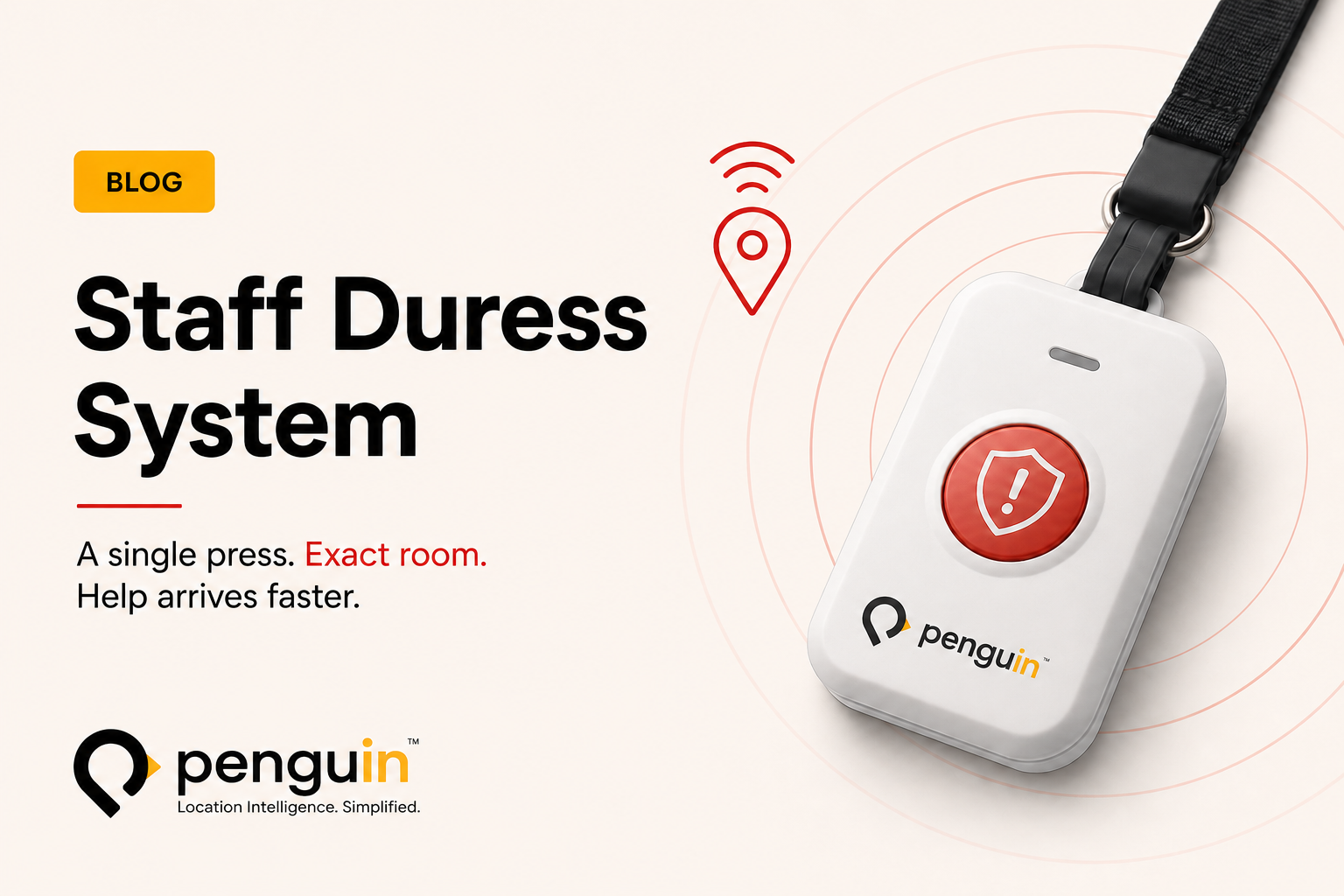
Know where your workforce is at all times, across vast sites, remote rigs, and pipeline corridors that stretch across kilometers of challenging terrain. PenSafe uses smart wearable devices for continuous monitoring, ensuring accountability across zones, shifts, and safety protocols regardless of how distributed the operation is.
When a worker enters a restricted area, approaches a hazardous zone, or deviates from an expected route, the system registers it immediately. Supervisors see the field in real time without needing to wait for a radio check-in or a manual muster report.
✅ Automated Safety Alerts and Escalations
PenSafe detects multiple risk scenarios, falls, lack of movement, restricted zone entries, and proximity to hazardous conditions, and triggers instant alerts the moment a threshold is crossed. When an initial alert is not acknowledged within a configurable window, the system auto-escalates to the next responder in the chain: shift supervisor, safety officer, emergency coordinator.
This escalation logic matters because it removes the assumption that the first alert will always reach someone in a position to respond. In field operations where supervisors may be in areas with poor radio coverage or attending to another situation, automatic escalation ensures the response chain does not stall.
✅ AI-Powered Risk Detection
PenSafe goes beyond basic tracking by using predictive analytics to identify risk patterns before they become incidents. The system can detect heat stress zones based on location and time-of-day data, flag hazardous area congestion when worker density in a high-risk zone exceeds safe levels, and identify unusual movement behaviors, a worker stationary for too long in an area where stillness is abnormal, for example.
This intelligence helps safety teams intervene before an incident occurs, rather than investigating afterward. Because the AI learns from historical event data specific to each site, its risk patterns become more accurate over time.
✅ Audit-Ready Safety Logs
PenSafe creates comprehensive digital safety logs with timestamped records of compliance events, incident responses, and near-miss documentation. Since regulatory frameworks in oil and gas, from OSHA to regional equivalents across the GCC, require documented evidence of active safety programs, these logs serve a direct compliance function.
When an incident does occur, the investigation has a complete, accurate timeline available immediately, rather than requiring reconstruction from radio logs, supervisor recollections, and partial records. This quality of documentation also drives genuine continuous improvement by revealing the specific conditions that preceded each event.
From Reactive to Predictive: The Future of Workforce Safety
Traditional incident management is reactive, companies respond after accidents occur. While post-incident investigation is valuable, it cannot undo harm that has already happened. PenSafe offers a different model: what if your system could predict risk instead of just recording it?
This is the shift PenSafe enables. By combining AI algorithms with real-time location data, oil and gas companies can identify the conditions that precede incidents and intervene before the incident completes. Heat stress develops over time, PenSafe detects the pattern. Congestion in a confined space builds gradually, PenSafe flags it. A worker’s movement pattern changes in a way consistent with fatigue, PenSafe alerts the supervisor.
The result is a fundamental change in how safety functions in a field operation. When safety becomes predictive rather than reactive, it transforms from a cost center, resources spent responding to harm, into a strategic investment that prevents harm from occurring at the cost structure that prevention demands.
Designed for Harsh Environments, Built for People
PenSafe delivers more than technology. It builds trust, the kind that comes from a system that works reliably in the environments where workers actually operate, not just in optimal conditions.
Ruggedized devices withstand extreme temperatures, humidity, dust, and physical impact. The infrastructure remains resilient under conditions that would compromise consumer-grade hardware. Intuitive dashboards enable easy adoption by safety teams who need to act on alerts quickly rather than navigate complex software.
Safety teams get the data they need. Workers get the peace of mind that comes from knowing their location is known, their distress signal will be heard, and their employer has invested in systems designed to protect them, not just to satisfy a compliance requirement.
Make Safety Your Competitive Advantage
In oil and gas, safety and productivity are not competing priorities, they reinforce each other. A workforce that feels protected is a workforce that performs. Contractors choose employers with strong safety records. Regulators scrutinize operations with incident histories. Investors and insurers assess safety performance as a proxy for operational quality.
PenSafe helps energy companies elevate their safety standards while reducing incident response times and creating a culture of proactive protection, powered by AI and location intelligence rather than manual processes. The technology investment pays back through avoided incidents, faster response, lower insurance exposure, and a workforce that stays.
For energy companies operating across the GCC region, Saudi Arabia, UAE, Qatar, and Kuwait, PenSafe’s multilingual platform and regional implementation support make it a practical choice for operations that serve diverse, multinational workforces across demanding environments. For a complete look at how PenSafe fits within a broader safety and operations platform, visit our industry solutions page.
Frequently Asked Questions About PenSafe for Oil and Gas
How does PenSafe work in remote or offshore oil and gas environments?
PenSafe uses BLE-based wearable devices that communicate with a sensor network installed across the facility, whether that is an offshore platform, a refinery, or a pipeline corridor. The sensor network connects to a central platform that tracks worker location, detects safety events, and routes alerts in real time. In environments with connectivity limitations, the system is designed to maintain local alert capability even when cloud connectivity is intermittent.
What types of safety events can PenSafe detect automatically?
PenSafe detects falls and impacts, prolonged stillness that may indicate incapacitation, restricted zone breaches, hazardous area congestion, heat stress patterns based on location and time data, and unusual movement behaviors that deviate from established baselines. The AI layer learns site-specific patterns over time, making detection more accurate as the system accumulates operational data.
How does automated escalation work in PenSafe?
When a safety threshold is crossed, a worker triggers a duress alert, a fall is detected, or a zone breach occurs, PenSafe sends an immediate notification to the designated first responder. If that notification is not acknowledged within a configurable window, the system automatically escalates to the next level in the response chain: shift supervisor, safety officer, or emergency coordinator. This continues until someone acknowledges and takes ownership of the response.
Does PenSafe generate documentation for regulatory compliance?
Yes. PenSafe creates comprehensive digital safety logs with timestamped records of every safety event, alert, acknowledgment, and response action. These logs satisfy the incident documentation requirements of OSHA, regional OHS legislation in GCC countries, and international oil and gas safety standards. When regulators or auditors request evidence of an active safety program, the system produces a complete audit trail without requiring manual compilation.
Can PenSafe be deployed alongside existing safety systems?
Yes. PenSafe is designed to integrate with existing safety infrastructure, communication systems, access control platforms, and emergency response tools, rather than requiring a full replacement. The platform adds location intelligence and AI-powered detection on top of existing investments, which means companies can upgrade their safety capability without a complete system overhaul.
Penguin Location Services delivers PenSafe, an AI-powered workforce safety platform covering staff duress alerting, real-time location tracking, automated escalation, and audit-ready compliance logging. PenSafe is deployed across healthcare, oil and gas, industrial, and enterprise environments. To discuss how PenSafe can work in your specific field operation, visit penguinin.com/contact.
Ready to Protect Your Oil and Gas Workforce?
Whether you are evaluating workforce safety systems for offshore operations, pipeline monitoring, or refinery environments, our team is ready to help you move from reactive to predictive safety.