
Hospitals lose millions every year to a problem hiding in plain sight. Hospital asset tracking has emerged as the operational solution that modern healthcare facilities can no longer afford to ignore — transforming the way clinical teams locate equipment, manage inventory, and ultimately deliver patient care. This guide breaks down how the technology works, what accuracy levels are available, and why the return on investment speaks for itself.
Table of Contents
- › What Is Hospital Asset Tracking — and Why Does It Matter?
- › The Hidden Scale of the Equipment Problem
- › How BLE-Based Asset Tracking Works in a Hospital Environment
- › Understanding Accuracy Levels — Matching Precision to Clinical Need
- › Key Asset Categories Where Tracking Delivers Measurable Value
- › Integration with Hospital Systems
- › What a Successful Implementation Looks Like
- › Frequently Asked Questions
What Is Hospital Asset Tracking — and Why Does It Matter More Than Most Facilities Realize?
Every hospital administrator knows the problem. A patient is waiting. A nurse needs a specific infusion pump, a portable monitor, or a wound-care cart. The last recorded location is a floor away — or three wings over — or simply unknown. So the search begins. Clinicians walk corridors. They call other units. They check supply rooms. Minutes pass.
This is not an occasional inconvenience. Research consistently shows that clinical staff in busy hospitals spend between 30 and 45 minutes per shift searching for misplaced or unavailable equipment. Across an entire facility and across an entire year, the operational and financial cost of that lost time is staggering. The clinical cost is harder to quantify, but it is no less real.
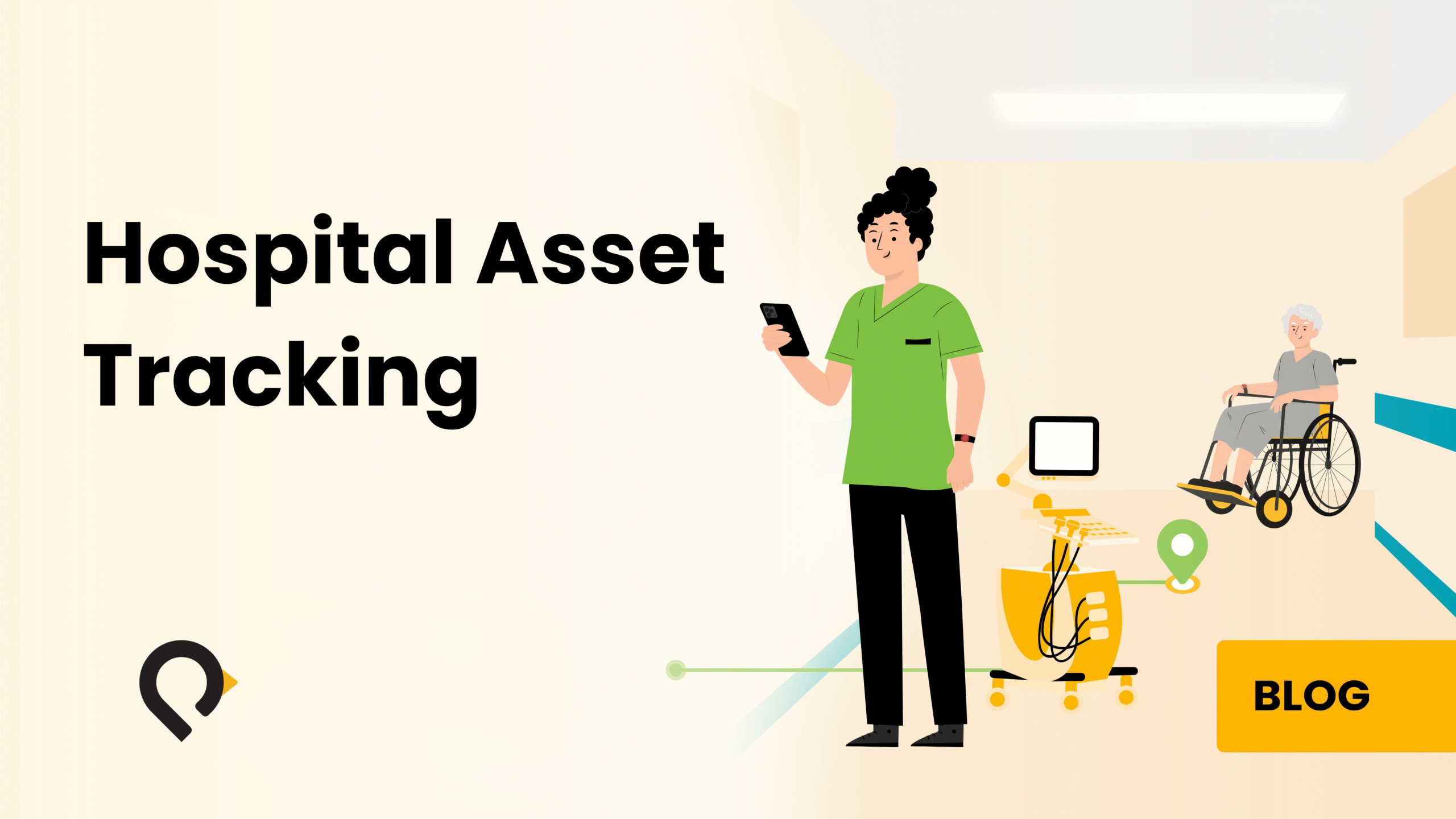
Hospital asset tracking is the practice of using technology to monitor the real-time location of medical equipment, devices, and other mobile assets throughout a facility. When implemented correctly, it eliminates equipment searches, reduces unnecessary purchases, prevents loss and theft, and gives clinical and operational staff the visibility they need to make faster, better decisions.
The Hidden Scale of the Equipment Problem
A mid-size hospital with 300 beds typically manages thousands of mobile assets: IV pumps, portable ventilators, wheelchairs, patient lifts, stretchers, infusion stands, pulse oximeters, ECG machines, feeding pumps, and dozens of other device categories. These assets move constantly — between patient rooms, supply areas, decontamination zones, storage rooms, and clinical departments.
Without a tracking system, hospitals rely on manual logs, staff memory, and periodic physical audits to manage this inventory. The results are predictable. Equipment disappears into unused rooms. Items accumulate on certain floors while shortages develop on others. Biomedical engineering teams cannot find devices scheduled for maintenance. Purchasing departments buy duplicate equipment to compensate for items that are simply lost within the building.
Industry data suggests hospitals routinely over-purchase equipment by 15 to 20 percent to compensate for items they cannot locate. Equipment rental costs — used to cover for missing owned devices — can reach tens of thousands of dollars per year even in medium-sized facilities. Asset tracking technology directly addresses all of these failure modes.
How BLE-Based Asset Tracking Works in a Hospital Environment
Real-Time Location Systems — commonly referred to as RTLS — are the technological backbone of modern hospital asset tracking. Among available wireless technologies, Bluetooth Low Energy (BLE) has become the dominant choice for healthcare environments.
The Core Mechanism
Each tracked asset carries a small BLE tag — a compact, battery-powered device that continuously broadcasts a unique identifier signal. BLE readers installed throughout the facility receive these signals. The RTLS software processes signal data from multiple readers and calculates where each tag is located within the building. The system then displays this position on a real-time digital map, updating continuously as the asset moves.
From a staff perspective the experience is simple: open the dashboard, search for the asset name or category, and see its current location on a floor map. In many implementations, staff receive this information through mobile apps, nurse call integrations, or EMR-connected interfaces — so they never need to access a separate system at all.
Why BLE 5.1 Specifically
The most current generation of BLE technology — BLE 5.1 — introduced Direction Finding. This allows BLE readers to determine the precise directional angle of a tag’s signal, not just its strength. Location accuracy improves significantly without requiring a denser or more expensive reader network.
BLE 5.1 also offers improved signal reliability, lower power consumption, and better performance in RF-congested environments like hospitals — where dozens of wireless systems operate simultaneously. For a technical deep-dive into how BLE 5.1 achieves room-level accuracy in real hospital environments, see the BLE 5.1 + Advanced Location Algorithms white paper.
Installation: No Wires, No Construction
BLE beacons and readers mount using 3M adhesive or standard ceiling clips. There is no wiring, no dedicated power cabling, and no construction disruption. In many hospitals, the existing Wi-Fi infrastructure serves as part of the reader network, further reducing hardware costs. This matters enormously in older hospital buildings where running new cabling is prohibitively expensive.
Understanding Accuracy Levels — Matching Precision to Clinical Need
Not every asset tracking use case requires the same level of location accuracy. One of the most important decisions in designing an RTLS deployment is matching the accuracy tier to the operational requirement.
Zone-Level Tracking
Zone-level accuracy tells staff which broad area of the hospital an asset is in — a floor, a wing, or a department. This tier suits assets that rarely need precise moment-to-moment location but should be findable without a physical search. It is the most cost-effective deployment model and requires the lowest reader density. A wheelchair management system at zone level tells staff whether the asset is on the second floor or the fourth floor — information that alone eliminates most search time.
Room-Level Tracking
Room-level accuracy pinpoints an asset to a specific room — patient room 214, supply closet C, or the decontamination bay on floor three. This is the most commonly requested accuracy tier for clinical asset tracking and what most hospitals need for IV pumps, portable monitors, and high-value equipment. BLE 5.1 systems achieve consistent room-level accuracy with moderate reader density, reliably distinguishing between adjacent rooms and between a corridor and a patient room.
Sub-Meter Tracking
Sub-meter accuracy provides location data precise to less than one meter — the system can tell you not just which room an asset is in, but approximately where within that room it sits. This level of precision suits specific high-value or high-sensitivity use cases: surgical instruments awaiting sterilization, medication dispensing equipment, or devices that must not leave specific clinical zones without triggering an alert. Sub-meter BLE 5.1 deployments require higher reader density and more careful site surveying.
Key Asset Categories Where Tracking Delivers Measurable Value
While every hospital has different equipment priorities, several asset categories consistently deliver the highest return on tracking investment.
Infusion Pumps and IV Equipment
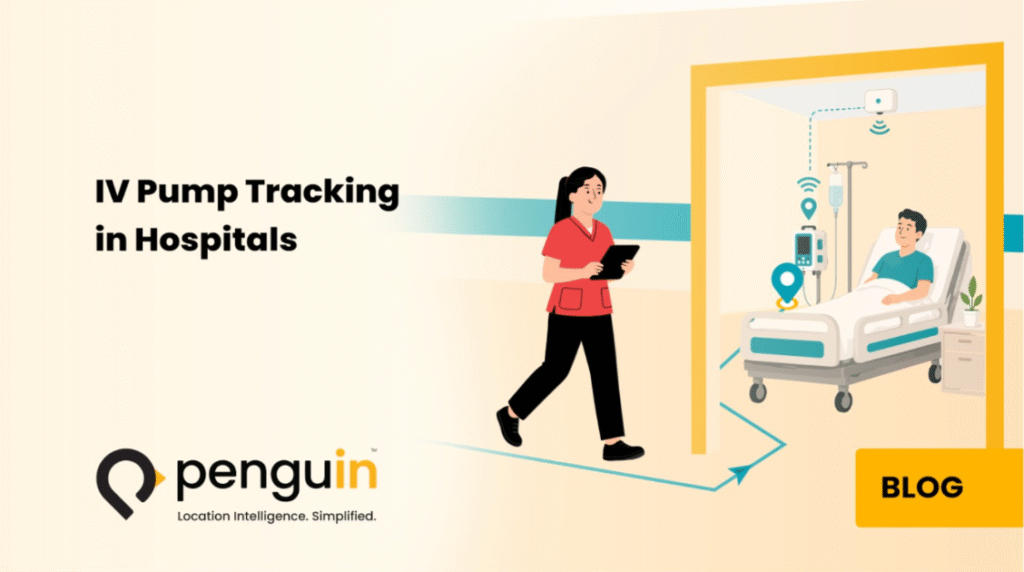
Infusion pumps are the most commonly tracked asset category in US hospitals. They are high-volume, high-value, and perpetually in motion between patients, storage, and decontamination. Tracking eliminates the search cycle that clinical staff experience multiple times per shift. Learn more about IV pump tracking in hospitals and the documented results from real deployments.
Portable Monitoring Equipment
Pulse oximeters, blood pressure monitors, and portable ECG machines move frequently between units and rarely return to their home location. Real-time visibility allows charge nurses to manage distribution across floors and prevent equipment accumulating in one area while another unit faces shortages.
Wheelchairs and Patient Transport Equipment
Wheelchairs rank among the most searched-for assets in any hospital. They accumulate in discharge areas, family waiting rooms, and clinical zones where staff no longer need them. Zone-level tracking is typically sufficient for this category and delivers immediate reductions in search time.
Biomedical Equipment Due for Maintenance
Biomedical engineering teams must locate devices on a scheduled basis for inspection, calibration, or PAT testing. With RTLS, biomedical engineering can query the system for every device in a maintenance cohort and retrieve their current locations — without physically searching the building. This directly supports RTLS and CMMS integration for automated maintenance scheduling.
Specialty and High-Value Clinical Equipment
Portable ultrasound machines, endoscopy carts, and surgical positioning equipment justify sub-meter tracking. Both their high value and the workflow disruption caused by unavailability make the investment worthwhile.
Integration with Hospital Systems: Where RTLS Becomes More Than a Map
Asset tracking technology delivers its full value when it integrates with the hospital’s existing operational systems rather than operating as a standalone tool. Penguin’s AI + Location Intelligence white paper covers how hospitals are building these integrations in practice.
CMMS Integration
CMMS integration connects asset location data with the Computerized Maintenance Management System. When a device is due for preventive maintenance, the CMMS queries the RTLS to retrieve its current location. A technician goes directly to that location rather than initiating a manual search.
EHR and EMR Integration
EHR integration surfaces asset location within the clinical workflow. A nurse requesting a specific device type through the EHR interface can see available assets nearby — without switching platforms.
Nurse Call System Integration
Nurse call integration enables location-aware alerting. If a tagged asset leaves a defined zone without authorization — or if a high-value device sits idle during peak demand — the nurse call system generates an alert to the appropriate team. The same infrastructure also powers staff duress alerting and patient wander prevention — extending the value of a single deployment across multiple use cases.
Access Control Integration
Access control integration adds a security dimension. If a tagged asset approaches an exit without an authorized discharge record, the system can trigger a door hold or alert. Together, these integrations transform RTLS from a location map into an active operational intelligence layer across the hospital’s entire technology ecosystem.
What a Successful Hospital Asset Tracking Implementation Looks Like
The technical infrastructure of asset tracking is only part of what determines success. Implementations that deliver lasting value share several common characteristics.
First, they begin with a clear asset inventory — every device category, approximate unit count, and priority ranking by search frequency and clinical impact. This inventory informs which asset categories receive which accuracy tier and defines the reader density each zone requires.
Second, they involve clinical and operational stakeholders early. When charge nurses, biomedical engineering teams, and clinical managers participate in the design phase, the resulting system reflects actual workflow rather than theoretical use cases. Staff adoption is dramatically higher when the people who will use the system have shaped how it works.
Third, they plan for ongoing map maintenance. Hospital layouts change — new wings open, departments relocate. An RTLS deployment that was accurate at go-live will drift without a process for updating the floor map and reader configuration as the physical environment evolves.
Frequently Asked Questions About Hospital Asset Tracking
What is the difference between RFID and BLE asset tracking in hospitals?
BLE tracking is continuous, while RFID is point-in-time. RFID requires a tag to pass within close range of a fixed reader — typically at a doorway or corridor chokepoint — to register its location. BLE tags broadcast continuously and any reader within signal range can detect them. As a result, BLE provides a more complete and current picture of asset location across large facilities.
Does hospital asset tracking require new wiring or construction?
No. Modern BLE-based systems use battery-powered tags and readers that mount with adhesive, so no new wiring, power cabling, or construction is required in most deployments. Existing Wi-Fi infrastructure often serves as part of the reader network, reducing costs further.
How accurate is BLE asset tracking in a hospital?
With BLE 5.1 technology and appropriate reader density, consistent room-level accuracy is achievable across standard hospital layouts — meaning the system reliably identifies which specific room a device is in, distinguishing between adjacent patient rooms, corridors, and supply areas. For facilities requiring higher precision, sub-meter accuracy is also achievable, locating an asset to within less than one meter within a room. Most hospitals deploy room-level accuracy for general equipment tracking and sub-meter for high-value or restricted devices. The appropriate tier depends on the asset category and the operational requirement it supports.
Can asset tracking integrate with our existing EHR or CMMS?
Yes. Modern RTLS platforms connect to leading EHR and EMR systems, CMMS platforms, nurse call systems, and access control infrastructure through standard integration APIs. In practice this means a nurse can see available equipment directly through the EHR interface without switching systems, while biomedical engineering teams receive automated maintenance alerts with the current device location pulled directly from the RTLS. Integration depth and supported platforms vary by vendor, so confirming specific compatibility during the evaluation process is important before committing to a deployment.
How long does it take to deploy a hospital asset tracking system?
Deployment timelines depend on facility size, existing infrastructure, and the number of asset categories being tracked. Most room-level BLE deployments in mid-size hospitals are operational within eight to twelve weeks of project initiation.
What happens when a BLE tag battery dies?
Modern BLE tags support battery life ranging from one to five years depending on broadcast frequency. RTLS platforms monitor tag battery health and generate alerts when tags approach end-of-battery thresholds — so teams can replace them proactively before location data is lost.
For more on the technology behind real-time location in healthcare, explore our complete RTLS in Healthcare guide, our RTLS and CMMS integration guide, and the What’s Next for RTLS white paper.
See Hospital Asset Tracking in Action
Penguin’s PenTrack platform delivers room-level asset visibility across your facility on existing Wi-Fi infrastructure — no proprietary hardware, no vendor lock-in, and no construction disruption.
The same infrastructure supports staff duress alerting, patient wander prevention, infant protection, and indoor navigation — one deployment, multiple use cases.
Reach out today
Contact Penguin Location Services to eliminate equipment search time, reduce unnecessary costs, and optimize hospital operations with real-time asset tracking.